Meditation in the snow
Snow falls upon the land, snow onto snow, flake over flake. Drifts start to form. Wrapped in snow, the world grows quiet. Bitter cold blows down from the Arctic. Like two firm hands, Snow and Cold press together upon the human uproar: Stop. You must stop.
An extreme “weather event” meets our extreme agitation. The sky is emptied of airplanes. The streets are emptied of cars. The sidewalks are emptied of ICE agents and of angry, grieving crowds.
If we have homes to go to – the security of a roof over our heads and of warmth within our walls – we are blessed by the coming of Fern (such a gentle name for such a massive storm). Might we receive her as a merciful interruption of our pell-mell, compulsive ingestion of the Next Awful Piece of News? Might her coming impel us to sit for a while in the stillness and to pray with what we know?
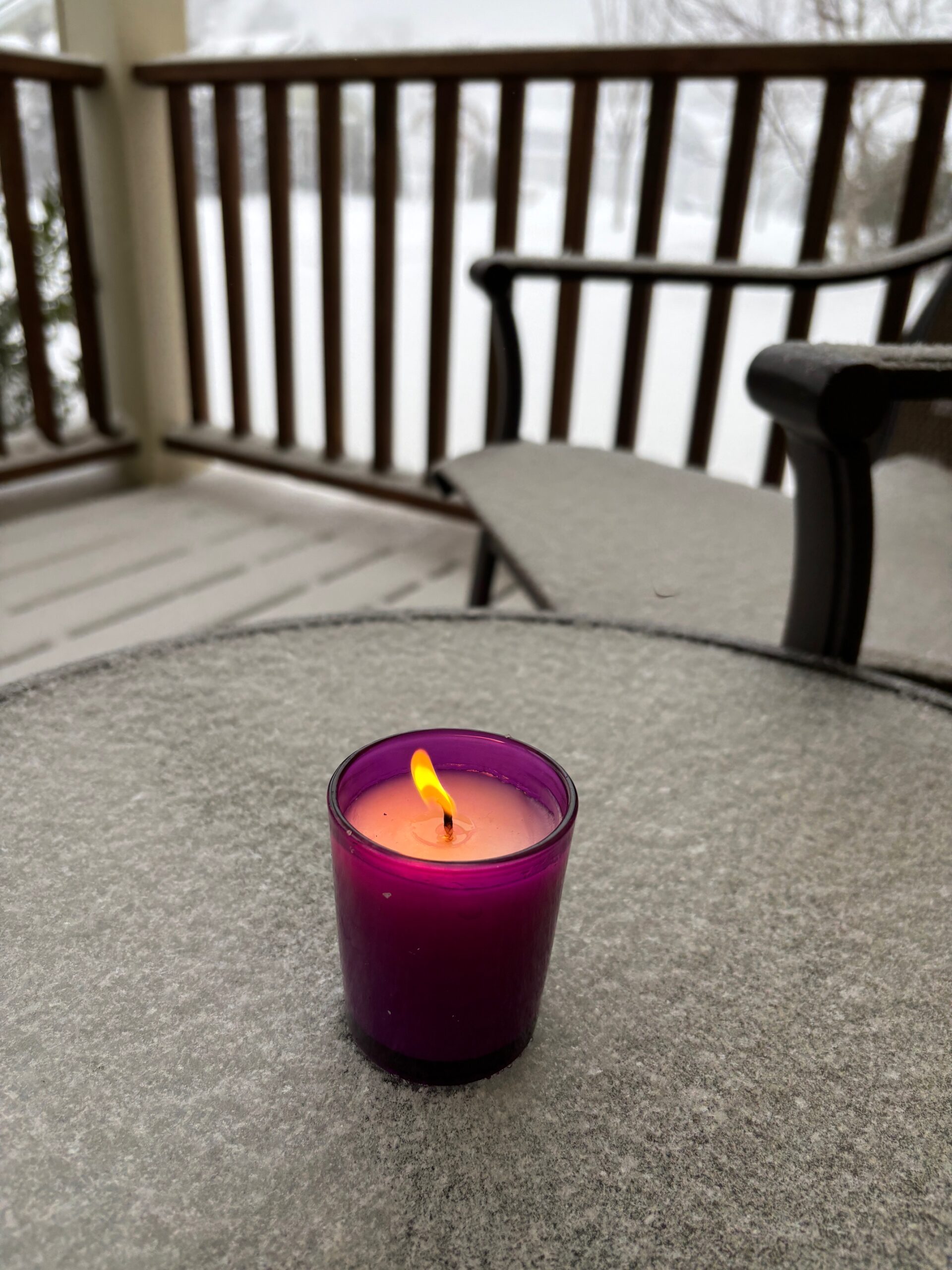
Turn off the television. Shut down the endless, addictive roar of voices that analyze, summarize, and speculate. Pull up a chair by the window or by the home altar, if we have one. There is more to learn than what the next expert can tell us. For the moment we are done with that kind of knowing. We have plenty to explore within us as snow falls and silence beckons. No more sound bites – just the sound, perhaps, of wind, a passing plow, snowflakes on the window, our own beating heart. No fresh images of violence perpetrated or endured – just the stillness of falling snow that welcomes and makes room for everything we carry already: Reneé Macklin Good (a Christian, a poet, mother of three) smiling, “I’m not mad at you,” just before she is shot; Alex Pretti (intensive care nurse at a VA hospital) reaching to assist a woman before being thrown to the ground and shot; images of heavily armed masked men roaming the streets with impunity; voices of federal leaders spewing malice and lies.
The snow holds all of this and more. Steady flakes fall on trees and streets, on roofs and sidewalks, on lamppost and mailbox. The flakes won’t stop falling. They are gentle, they are fierce, they are relentless, and they keep coming. They have come to stop us in our tracks. They have come to urge us to be still and to listen.
Listen, says Spirit, to the sorrow and anger that fill our hearts. Listen to the voices that cry for justice. Listen, above all, to the love that we inhale and release with every breath that God gives us. Can we sit in silence and breathe in that love? Can we let the snow coax us to pay attention to our interior life, to the feelings we skim over during our usual busy days? Can we express those feelings in the presence of the One who loved us into being and who sustains and guides us even now, in this dark moment, whether we know it or not?
Our prayer will likely not be calm. We may need to wail or to stretch out our arms as we pray for justice. We may need to weep or to clasp our hands together or across our chests as we pray for forgiveness: Lord have mercy. We may need to shudder or to fall on our knees or even to lie on the floor. How can our bodies honor the particularity of this moment when so much is at stake and when our neighbors – human and more-than-human – are being assaulted and when love itself is mocked and crucified?
I wonder, as the snow falls, can we let this pause be a holy pause, a pause that restores our felt connection to our souls and to our fellow beings? Can we let ourselves be changed, so that we emerge from this extraordinary storm as people who are wiser, clearer, and more ready to follow wherever Love leads?
Heart Prayer
You can only pray what’s in your heart.
So if your heart is being ripped from your chest
Pray the tearing
if your heart is full of bitterness
pray it to the last dreg
if your heart is a river gone wild
pray the torrent
or a lava flow scorching the mountain
pray the fire
pray the scream in your heart
the fanning bellows
pray the rage, the murder
and the mourning
pray your heart into the great quiet hands that can hold it
like the small bird it is.
— Elizabeth Cunningham:

10 Responses to “Meditation in the snow”
Lyn Brakeman
Dominus flevit. The panorama of just one beloved land brought open-hearted tears to the eyes of Jesus of Nazareth. May this one image move our own hearts to open wide, look, and see, even blurry-eyed, the heart of Divinity conjoined with Humanity to come. YES!
mbj
Thank you, Lyn, for mentioning Dominus flevit, Latin for “the Lord wept.” In Luke 19:41, Jesus weeps over the city of Jerusalem. I hadn’t thought of that scene, but it resonates deeply with this moment. Thank you.
David Nevin
Thank you, Margaret, beautifully said. It reminded me of the following:
“Behind the Mistral is the beauty of Provence. Its fierceness blows away clouds and grime and doubt, leaving colors the depth of dreams and a freshness that can come only after the Mistral’s scouring. Provence needs the Mistral or it ceases to be the Provence of my dreams.” – Kamiah A. Walker
Nature always possesses the heart and soul and love for returning the earth and us to the beauty God intended for all of creation whether it be gentle snow or a fierce cleansing wind or a flower pushing up through the charred earth. She never fails to seek the eternal truth of God’s Love. Blessings to you and the work you do.
David
mbj
Thank you, David, for that powerful quote from Kamiah Walker and for your thoughtful words about the messages we can receive from the natural world, if we have ears to hear.
Trish Callard
Margaret
Your images of storm Fern and your invitation to be quiet was just the meditation I needed to hear tonight
Thank you
Trish
mbj
I’m so glad, Trish!
Wendy Wheeler
Thank you for this meditation Margaret. Focusing on the snow and the stillness tonight also makes me think of the carol “In the Bleak Midwinter” with Christina Rossetti’s beautiful words “Snow had fallen, snow on snow, snow on snow, in the bleak midwinter, long ago.” Tomorrow with our heads cleared we soldier on.
mbj
That hymn was circulating in the background as I wrote the first sentence. You spotted it! And I agree with you heartily — tomorrow we soldier on.
Marie-Caroline
So many thanks for this, Margaret. Do please rest, you need it and we need you. xoxo mc
mbj
Thank you, friend.