The glorious California coast. Last year, mudslides blocked portions of Rt. 1.
On September 19, the day before the Global Climate Strike, I returned home from an intensive mission trip along the coast of California, where I preached, led retreats and workshops, and spoke in multiple cities about the climate crisis. It was the first time I’d met people who had so recently and directly experienced the disastrous effects of climate change, from massive heat waves, droughts and wildfires to torrential rainfall and mudslides. I didn’t need to say very much about the urgency of the situation – I could tell from the alarming stories they shared and the concern in their faces that they already understood: we need as a species to change course fast. From Santa Barbara to Cupertino I urged everyone I met to join the weeklong Global Climate Strike.
Back in western Massachusetts on September 20, I spoke at two Climate Strike events in my corner of the world, Springfield and Northampton. Below are the notes for my remarks.
————————
Springfield Climate Vigil: Standing for life
Under a hot sun, sixty or seventy people gathered at Court Square, Springfield, MA, for a climate solidarity vigil filled with music, speaking, and prayer. Organized by Verne McArthur, the vigil featured speakers including Buddhist teacher Jin Haeng Kyle Wiswall, Springfield City Councilor-at-Large Jesse Lederman, Deacon Bill Toller (who read a statement by U.S. Roman Catholic bishops on the need for climate action), Rev. Jason Seymour (Unitarian Universalist Society of Greater Springfield), Sister Melinda Pellerin-Duck (Sisters of St. Joseph of Springfield), and me. Rev. Marisa Brown Ludwig joined Verne in leading the singing. Here is what I said:
I am grateful to be standing with you! In my tradition there is a story of God’s people standing at a crossroads. They have a choice to make, and Moses says to them: “Today I have set before you life and death, blessings and curses. Choose life so that you and your descendants may live.”
Rev. Margaret speaking at the Springfield climate vigil. Photo credit: Marisa Brown Ludwig
We, too, stand at a crossroads. We are living at a pivotal moment in human history, where the choices we make going forward will make all the difference to the wellbeing of our children and our children’s children, and to the life – or death – of billions of people and non-human species around the world.
We know we have a choice. Today, at this crossroads, we stand for life.
You know that we face a long struggle ahead. The U.N. Intergovernmental Panel on Climate Change has told us that we need to transform our society at a rate and scale that are historically unprecedented. This task will demand all our reserves of strength and courage. We need spiritual resilience. So it’s good to know where we are rooted and where we find strength.
Where does our strength come from? We begin by knowing where we stand.
We stand on Mother Earth. I invite you to feel your feet on the ground and to feel the good Earth holding you up. We can imagine our roots going down deep into the Earth, and from deep within Mother Earth we are drawing up strength.
We also stand with trees and all green-growing things.
We stand with other creatures – our brother-sister beings;
with children and young people who long to inherit a habitable planet; and
with the marginalized and poor, the people most vulnerable to climate change.
We stand with everyone who is suffering right now from floods, droughts, and storms,
and with the millions of people worldwide who are rising up to say that they won’t settle
for a death-dealing way of life.
We stand for a better future.
We stand for the possibility that love, not hate, will have the last word.
We stand for the possibility that our species will learn wisdom and compassion, generosity and self-control, so that we become at last what we were made to be: a blessing on the Earth.
And we stand in something, too. What do we stand in?
We stand in love.
We stand in the divine love that is always being poured into our hearts,
in the love that will never let us go and that will be with us till our journey’s end.
We stand in the love that nothing, not even death, can destroy.
We stand in the love whose power, working through us, can do infinitely more than we can ask or imagine.
You and I – we stand for life. Thank you!
————————
Hundreds of people filled downtown Northampton at the climate rally on September 20, 2019
Climate Emergency March for a Just Future, Northampton: A blessing
Late in the afternoon, many hundreds of people marched from Sheldon Field to downtown Northampton for a rally at City Hall. Organized by Marty Nathan (Climate Action NOW of Western Massachusetts), the rally featured music (led by Peter Blood and Paul Kaplan, and by Expandable Brass Band) and a range of speakers, including State Senator Jo Comerford, City Council President Ryan O’Donnell, Barb Madeloni (Labor Notes and past President, Massachusetts Teachers Association), Victor Davila (Neighbor to Neighbor Springfield), Maeve McCurdy (Divest Smith), State. Rep. Lindsay Sabadosa, Patrick Burke (SEIU and Hampshire Labor Council), Andrea Schmid (Pioneer Valley Workers Center), and Kate Parrott (teacher at JFK Middle School).
Rabbi David Seidenberg (Prayerground Minyan) and I offered closing blessings. After each of us had prayed, the Rabbi blew his shofar to complete the rally. My blessing, more or less as delivered, is below.
Friends, we have good work to do and we face great challenges ahead. We need to root ourselves in our deep sources of wisdom, strength, and courage. This is a good time to turn to a power greater than ourselves, one that we know by many names: Great Spirit, loving Mystery, Creator and Sustainer of life. Dante called it “the love that moves the sun and the other stars.” Trusting in that sacred power, we can do infinitely more than we can ask or imagine.
I’d like to offer a blessing that I adapted from a Franciscan prayer1 that may be familiar to some of you. I invite you to join me in a spirit of prayer.
Rabbi David Seidenberg and Rev. Dr. Margaret Bullitt-Jonas offer a closing blessing. Photo credit: John Thorpe
May God bless us with discomfort
At easy answers, half-truths, and superficial relationships,
So that we may live deep within our heart.
May God bless us with anger
At injustice, oppression, and exploitation of people and the Earth,
So that we may work for justice, freedom, and peace, and pass along to the next generation a habitable world.
May God bless us with tears
To shed for people and all our brother-sister beings who suffer from the effects of climate change,
So that we may reach out our hands to comfort them
And turn their pain into joy, and our grief into action.
And may God bless us with enough foolishness
To believe that we can make a difference in the world,
So that we can do what others claim cannot be done
To bring justice and kindness to children, to the poor, and to the whole of God’s Creation.
Amen.
1. The source of this prayer is unclear. One Website attributes it to Craig Groeschel: https://www.goodreads.com/quotes/280711-may-god-bless-you-with-discomfort-at-easy-answers-half
The original version reads:
May God bless you with discomfort
At easy answers, half-truths, and superficial relationships,
So that you may live deep within your heart.
May God bless you with anger
At injustice, oppression and exploitation of people,
So that you may work for justice, freedom and peace.
May God bless you with tears
To shed for those who suffer pain, rejection, hunger, and war,
So that you may reach out your hand to comfort them
And turn their pain into joy.
And may God bless you with enough foolishness
To believe that you can make a difference in the world,
So that you can do what others claim cannot be done
To bring justice and kindness to all our children and the poor.
Sermon for the Thirteenth Sunday After Pentecost, September 8, 2019
Delivered by the Rev. Margaret Bullitt-Jonas at Trinity Episcopal Church, Santa Barbara, CA
Deuteronomy 30:15-20Psalm 1Philemon 1-21Luke 14:25-33
Choose life for you and your children!
What a joy to be with you! I serve as Missioner for Creation Care in both the Episcopal Diocese of Western Massachusetts and the United Church of Christ in Massachusetts. In this ecumenical role I travel from place to place, sometimes (as you can see) far beyond Massachusetts, speaking about the Gospel call to protect God’s Creation. If you’d like to hear what I’m up to, please take a look at my Website, RevivingCreation.org. I know you’re already taking steps as individuals and as a congregation to safeguard what our Prayer Book calls “this fragile Earth, our island home,” so even though we’ve never met, I feel as if I’m among friends.
We have a fine text to reflect on this morning, the passage in Deuteronomy where Moses speaks to his community and gives them a choice. “I have set before you today life and prosperity, death and adversity. If you obey the commandments of God, by loving God and walking in God’s ways, then you shall live and God will bless you. But if your heart turns away and you do not hear, but are led astray to bow down to other gods and serve them, I declare to you today that you shall perish. Today I have set before you life and death, blessings and curses. Choose life so that you and your descendants may live.”1Before the service: Rev. Elizabeth Molitors (Rector), Rev. Dr. Margaret Bullitt-Jonas, and Rev. Sarah Thomas (Curate)This is one of those familiar passages that most of us have probably heard many times and considered mildly interesting in an abstract sort of way. “Choose life so that you and your descendants may live” (Deuteronomy 30:20). Today, however, that summons could not be more apt or timely or clear. We live at a pivotal moment in human history. Humanity stands at a crossroads where the choices we make going forward will make all the difference to the well-being of our children and our children’s children, and to the life (or death) of billions of people and non-human species around the world. What will we choose? Will it be life or death, blessing or curse?
By now we’ve all heard about the drastic effects of continuing to burn fossil fuels, such as monster hurricanes like Dorian, which has decimated the Bahamas and also marks the first time in history that a Category 5 hurricane has hit the Atlantic four years in a row. Here in California, on the other side of the country, I know you’ve had your own encounters with a changing climate. I recently finished Bill McKibben’s new book about the climate crisis, Falter: Has the Human Game Begun to Play Itself Out? He quotes from an article by my friend Nora Gallagher2– a member of this parish – which describes what it was like last year to endure record heat and dryness and blazing wildfires, followed by heavy rains and massive mudslides and debris flows. My heart goes out to all of you.
And our hearts go out to all the people and creatures around the world where fires are ablaze right now – in the Arctic; in central Africa; in Indonesia; and in the Amazon basin, where the rainforest that’s often called “the lungs of the planet” is on fire and close to crossing a tipping point into which it begins to self-destruct, die back, and release vast quantities of greenhouse gases.
The web of life is unraveling before our eyes. “There are half as many wild animals on the planet as there were in 1970,”3 a fact that scientists are calling a “biological annihilation.” One expert commented: “This is far more than just being about losing the wonders of nature, desperately sad though that is…This is actually now jeopardizing the future of people. Nature is not a ‘nice to have’ – it is our life-support system.”
So, my friends, are we afraid? You bet we’re afraid, and if we’re not, we ought to be. As David Wallace-Wells says in the opening sentence of his new book about climate change, The Uninhabitable Earth: “It is worse, much worse, than you think.”4 Fear is appropriate and fear can be worthwhile, propelling us to take urgently needed and long-delayed action. But fear can also freeze us in our tracks, so that we get paralyzed and stuck in inertia, wondering if it’s worth doing anything at all. We say to ourselves, “Maybe it’s too late to change course and maybe we’re too far gone. Besides, what difference can one person make?” Paralyzed by fear, we can close down, put up our blinkers, and carry on with business as usual, even if business as usual is wrecking the planet. And fear can separate us from each other, so that we push each other aside and build walls to keep each other out and keep each other down. Fear can lead us to oppress and dominate each other, and it’s fear that drives the politics of “divide and rule.”
Trinity Episcopal Church, Santa Barbara, CA I’m very interested in what helps us to move beyond fear, inertia, and despair and to throw ourselves wholeheartedly into the movement to address climate change – so interested, in fact, that a friend and I asked colleagues in the faith-and-environment movement to write about their sources of spiritual strength. What gives them courage? What gives them hope? Our anthology of essays will be published this fall and it’s called Rooted and Rising: Voices of Courage in a Time of Climate Crisis.
What gives you courage to take action, even when the forces against us are great? What are your sources of strength and resilience in a perilous time?
As for me, I draw strength from the living presence of Jesus Christ who is with us as we listen to Scripture, who comes to us as we sing and pray, whose love is poured into hearts through the power of the Holy Spirit, and who feeds and strengthens us when we stretch out our hands to receive the bread and wine of the Eucharist. Our fears can be strong, and the powers-that-be in this world are surely doing everything they can to stoke our fears of each other and to pull us apart, but Jesus’ words and presence convey bracing good news: we are infused and surrounded by a divine love that holds us together and that will never let us go. God loves us, and loves all Creation, with a love that nothing can destroy. As we breathe in that divine love and breathe it out in acts of healing and justice and compassion, our courage and strength are renewed.
That is the great gift that communities of faith can give the world in such a frightening time: practices of prayer and community, practices of meditation and story-telling, practices of singing and ceremony, that connect us with a sacred, loving Power beyond ourselves. We don’t have to settle for a life that is undergirded and overshadowed by fear. As the Persian poet Hafiz once put it, “Fear is the cheapest room in the house. I’d like to see you in better living conditions.”5 When we move out of fear and into God’s love, we know in our bones how precious we are, how precious our neighbors are, how precious this whole, beautiful planet is, and we rise up to say that we will not settle for a death-dealing way of life – we will not settle for wrecking the planet. We hear God’s summons and we intend to be a blessing on the Earth, not a curse. We intend to choose life.
When it comes to climate change, there is so much that we can do! Maybe we can plant trees. Save trees. Recycle more. Drive less. Drive electric. Eat local, eat organic, eat less meat and move to a plant-based diet. Maybe we can support local farms and land trusts. We can fly less – and, if we must fly, buy carbon offsets. Maybe we can afford solar panels and move toward a carbon-neutral home. If we have financial investments, we can divest from fossil fuels. If we’re college graduates, we can push our alma mater to divest, as well.
Individual changes are important, but because of the scope and speed of the climate crisis, we need more than individual action – we need systemic change. As the U.N.’s Intergovernmental Panel on Climate Change makes clear, we need to transform our society and economy at a scale that is historically unprecedented, and do so in a very short span of time.
So we’ll need to use our voices and our votes, and make it politically possible to do what is scientifically necessary. Here are three ideas.
One: We can support the Green New Deal, the first resolution to address the climate crisis with the urgency, focus, and comprehensiveness that the situation requires. The Websites for GreenFaith and for Interfaith Power & Light offer statements for us to sign, to show that people of faith support the values and goals of the Green New Deal.
Two: We can support non-profit groups like Corporate Accountability that are working to push the fossil fuel industry out of international climate talks and to hold it accountable for its decades of deception about the causes of the climate crisis.
Greta Thunberg at a climate strike event in March 2019. Photo credit: Klimastreik_19-03-01_0177″ by campact, licensed under CC BY-NC 2.0And three: we can support the weeklong Global Climate Strike, which begins on September 20. I see that here in Santa Barbara, a climate strike will be held on September 27 at 12 Noon on the plaza in front of City Hall. Put it in your calendars. Make a plan to take part. Last year a teenaged girl walked out of school, sat down in front of the Swedish Parliament with a handmade sign, and demanded climate action. Back then Greta Thunberg, according to one reporter, was “a painfully introverted, slightly built nobody.” Greta similarly describes herself as “always [being] that girl in the back who doesn’t say anything. I thought I couldn’t make a difference because I was too small.’” Well, today, one year later, Greta Thunberg’s quiet, relentless, and disarming protest Friday after Friday, week after week, has drawn the world’s attention and sparked a vast and growing movement of student strikes around the world.
Starting on September 20, people everywhere – all kinds and ages of people, not just students – will engage in a Global Climate Strike as we use our collective power to stop “business as usual” in the face of the climate emergency. This could be the biggest climate action the world has ever seen, and countless people of faith will take part – including Episcopal bishops at the House of Bishops meeting in downtown Minneapolis, led by our Presiding Bishop, Michael Curry.
As Greta Thunberg said several months ago in a speech at the annual meeting of the World Economic Forum: “Our house is on fire… We have to stop our emissions of greenhouse gases. Either we do that or we don’t… Either we prevent 1.5C of warming or we don’t… Either we choose to go on as a civilization or we don’t… We all have a choice. We can create transformational action that will safeguard the living conditions for future generations. Or we can continue with our business as usual and fail. That is up to you and me.”
Hear again with me the words of Moses: “Today I have set before you life and death, blessings and curses. Choose life so that you and your descendants may live.”
What will you choose? If you chose life, what would you do now? What would you do next? May God give us the strength and courage we need to rise up and choose life!
1. Paraphrase of Deuteronomy 30:15-20.
2. Bill McKibben, Falter: Has the Human Game Begun to Play Itself Out? (New York: Henry Holt and Company, 2019), 32-33.
3. McKibben, 12.
4. David Wallace-Wells, The Uninhabitable Earth (New York: Tim Duggan Books, Penguin Random House, 2019), 3.
5. Hafiz, quoted by Jack Kornfield, The Art of Forgiveness, Lovingkindness, and Peace (New York: Bantam Books, 2002), 83.
Shocked and helpless, I watched the live-stream as Notre Dame Cathedral went up in flames. Fire spread across the roof and the church’s mighty spire toppled and fell. Crowds gathered in Paris that spring night to weep and pray, to sing hymns and bear witness. Meanwhile, hundreds of fire fighters struggled to extinguish the fire, and another hundred removed artwork and sacred relics. I felt as if I were holding my breath with millions of others around the world as we waited to learn the fate of what some people consider a spiritual and cultural treasure.
Cathedral of Notre Dame on fire. Photo credit: Nivenn Lanos on Unsplash
Firefighters risking everything eventually brought the flames under control, and, some twelve hours after it began, the fire was snuffed out. We awoke the next morning to study the ruins and to give thanks for what was still standing: bell towers, pipe organs, and rose windows.
Rebuilding began.
But Notre Dame is not the world’s only holy place: every culture has equally precious places that mediate the transcendent. Every mosque and temple is sacred, every shrine and synagogue, and every storefront church.
The fire in Notre Dame – literally, “Our Lady” – is over. But the fire on Mother Earth rages on.
The cathedral of life is being torched before our eyes. Year by year, temperatures worldwide continue to rise, setting new records for heat. Ice caps are melting; glaciers are thinning; even the deep oceans are warming. We who are middle-aged were born into a planetary cathedral blessed with a glorious profusion of alpine meadows and coral reefs, ice shelves and wetlands, soaring forests and expansive estuaries – a beautiful, complex, fragile, and resilient sanctuary that allowed life to flourish. But that living architecture is being rapidly dismantled as the climate crisis heats up. More than half the world’s population of animals has vanished since 1970, in part because of climate change.
The web of life is going up in smoke, as the climate grows increasingly inhospitable to all life, including humans. And the people who are least responsible for climate change – low-income communities, indigenous communities, people of color, and the historically marginalized – are suffering first and hardest.
Climate arson
The Intergovernmental Panel on Climate Change (IPCC) warns that we have only a small window of time – perhaps twelve years – in which to transform our economies and make a decisive change of course away from fossil fuels and toward clean, renewable sources of energy.
Otherwise, the Earth could scorch and the cathedral of life could collapse. But already, around the world, the effects of climate change are disastrous: rising seas, massive droughts, extreme weather events, the spread of vector-borne diseases, and millions of climate migrants forced to leave their homelands.
As of this writing, the cause of the fire in Notre Dame is still unknown. By contrast, the cause of our planetary fire is well understood. For more than 30 years scientists have been sounding the alarm about the dangerous effects of burning coal, gas, and oil.
Photo credit: Patrick Hendry on Unsplash
And Exxon has known this for even longer – since the 1960’s. Did it change its business model? No. Did it chart a new course and invest in clean, renewable energy? No. Instead, Exxon and other Big Polluters funded climate deniers and think-tanks that deny climate science; blocked protections that would promote clean, safe, renewable energy; confused the public by spreading misinformation; and poured billions of dollars into the effort to persuade us that fossil fuels are the answer to our energy needs.
Despite Big Polluters’ extensive campaign of climate disinformation, people in the U.S. are finally beginning to see through the lies. As a result, the fossil fuel industry is taking a new tack: greenwashing. Eager to be perceived as environmentally friendly and as contributing to the common good, Exxon and other fossil fuel corporations present themselves as “energy” companies that are as devoted to providing power from sunshine and wind as they are to burning fossil fuels. (For a while, BP even tried to persuade the public that its brand was “Beyond Petroleum.”)
If fossil fuel corporations are successful in carrying out their business plans, which require unlimited expansion of markets and ever-increasing extraction and burning of fossil fuels, they will destroy life as it has evolved on this planet, including humans.
Determined to douse the fire
I watched helplessly as Notre Dame Cathedral caught fire, but we don’t have to be helpless spectators of climate change. We don’t have to settle for standing wretchedly on the sidelines, wringing our hands. Instead, we can take responsibility for protecting our earthly cathedral, both as individuals and as members of society.
As individuals, we can learn to live more gently and lovingly in the cathedral of life. We can do everything possible to cut back sharply on our use of fossil fuels and to make wiser choices around energy.
As members of society, we can make an even greater difference. The climate emergency requires more than incremental or individual solutions: it requires bold, decisive action and systemic change. The time has come to rein in the corporate and political powers that are making huge profits by treating people and planet alike as disposable. Unless we stop them, they will extract and burn every last ounce of coal and every last drop of oil and gas until the Earth is laid waste.
The call to kick Big Polluters out of climate policy grows louder each year. Pictured: People around the world demand a climate treaty that puts people’s needs over polluters’ bottom line at the 2018 U.N. climate treaty negotiations in Poland. Photo credit: Corporate Accountability.
That’s where the crucial work of the non-profit organization Corporate Accountability comes in: it campaigns to hold Big Polluters accountable for knowingly fueling and denying climate change. Along with a majority of the American public, Corporate Accountability understands that the fossil fuel industry bears a burden of responsibility for the harm caused by global warming and should pay for the damages.
Uplifted by a vision of a more just and life-giving society in which all people can thrive, Corporate Accountability is organizing to stop Big Polluters from writing the rules and is holding them accountable for the crisis they have fueled.
It’s time to become as focused as a fire fighter and to figure out not only how to douse the flames but also how to stop the band of arsonists that continues to fuel the fire.
Let’s say you know an arsonist – someone who is lighting and pouring gasoline on countless fires, but denying any responsibility for the havoc they cause. And let’s say you are a firefighter who is struggling to extinguish one of those fires. What if that arsonist dressed himself up like a firefighter, approached you, and earnestly claimed to be “part of the solution”? Would you let him anywhere near the building you were trying to save? Of course not! You’d probably grab his arm, hold him back, and cry out for someone to take him to court.
The climate crisis threatens everything we love. With that great love pouring into our hearts – our love for our children, our love for birdsong and whale-song, our love for clean air and clean water and for all the conditions that allow life to flourish on this planet – it’s an honor to stand with Corporate Accountability. I hope that you will join me in supporting their mission to confront the fossil fuel industry and hold it accountable. We intend to do everything in our power to save the living cathedral that God entrusted to our care.
##
This essay is also posted at Corporate Accountability’s Website here.
Sermon for the Fifth Sunday After Pentecost, July 14, 2019
Delivered by the Rev. Margaret Bullitt-Jonas at St. John’s Episcopal Church, Williamstown, MA
Amos 7:7-17Psalm 82Colossians 1:1-14Luke 10:25-37
A plumb line in our midst: When we stop pretending about climate change
“This is what the Lord God showed me: the Lord was standing beside a wall built with a plumb line, with a plumb line in his hand. And the Lord said to me, ‘Amos, what do you see?’ And I said, ‘A plumb line’” (Amos 7:7).
That interested me, this image of God standing beside a wall, holding up a plumb line to see whether or not the wall was straight and could stand. So I went on the Internet and learned that plumb lines are useful in a great many fields. A plumb line, or something like it, can be essential if you want to build a house or build a ship, or if you want to make a level wall or draw a good map. Carpenters use plumb lines, and so do stonemasons, astronomers and geographers.
Introducing Sustain Island Home at St. John’s, Williamstown: Rev. Nat Anderson, Rev. Dr. Margaret Bullitt-Jonas, Deacon Eric Elley, Edith AllisonI went to a hardware store to get a plumb line. Here it is. As I let the weight drop, we establish a vertical line. And with that perpendicular line, we can test to see whether something is in alignment, whether it is straight and sturdy. When I raise the string, I can see, for instance, whether the walls in this sanctuary stand up straight or if they tilt. Good news – they’re straight! As I lower the string, the weight sinks straight down, which, among other things, would be helpful if I were fishing and wanted to measure the depth of the river or pond. This simple tool has a wonderful figurative meaning, too: when we want to get to the bottom of things, we speak of “plumbing” the depths.
Here’s what I like about a plumb line: it tells the truth. It’s objective. It doesn’t care about my preferences, my agenda, or my political views. It simply shows me what’s true: either the wall is straight or it’s not. I find that refreshing in a time when press conferences and tweets are so full of deception, spin, and outright lies. A plumb line shows the truth, plain and simple, so that we can see what we’re actually dealing with and can understand what needs to be done.
So today we meet Amos, a shepherd back in the 8th century before Christ. He begins to have intense experiences of God. He begins to feel God’s persistent, unstoppable longing for people to live in loving, just, and liberating relationships with each other and with the land. Amos is the prophet that Martin Luther King, Jr. so often quoted: “Let justice roll down like waters, and righteousness like an ever-flowing stream” (Amos 5:24). In fact, Amos has such a vivid experience of what we might call Beloved Community – and such an acute sense of how the society around him is falling short – that he leaves his little village and heads to his nation’s center of power to proclaim God’s judgment and grace.
In one of his visions, Amos sees God standing beside a wall with a plumb line in his hand. The wall was built with a plumb line and designed to be sturdy and balanced. And then, as Amos watches, God sets the plumb line in the midst of his community. What does God see? Is the nation structurally sound, like a well-built wall? Are the people living in alignment with God’s love so that the society is compassionate and just and dedicated to the common good?
Apparently not! In a blast of anger, God declares that the nation’s centers of power will fall. The nation is like a wall that is askew: it’s morally unsound and unbalanced. The whole Book of Amos blazes with the prophet’s outrage as he accuses the nation of abandoning the loving purposes of God.
Well – no surprise – this message doesn’t sit well with the powers-that-be. Amaziah, the high priest, is an ally of the king. He warns the king that Amos is a troublemaker who must be stopped, and he tells Amos to flee, to get the heck out of there. Amos can prophesy all he wants to back home, but he must never again speak at Bethel, the nation’s center of religious and political power.
Now here’s the part I really like. Amos answers by saying, “I am no prophet, nor a prophet’s son; but I am a herdsman, and a dresser of sycamore trees” (Amos 7:4). In other words, he’s not a professional prophet – he doesn’t do this for a living. He’s not a lobbyist. He doesn’t get paid; he didn’t inherit the role; he didn’t plan to be a prophet, he didn’t study to be a prophet, and for all we know he doesn’t even particularly want to be a prophet. Amos is just a regular guy with a humble job in some forgotten, far-away village, but God intervened in his life and compelled him to act and speak as a prophet. Amos became so fired with God’s love and God’s yearning for justice that he had to confront the people and powers of his time that were invested in perpetuating an unjust status quo. Amos says, “The Lord took me from following the flock, and the Lord said to me, ‘Go, prophesy to my people Israel” (Amos 7:15).
Here’s the very good news: Amos is alive and well and in our midst. Amos is everybody who grieves and protests injustice and lies. Amos is everybody who is willing to hold up a plumb line and to face facts, even the ones that are difficult to face. For we know for a fact that our society is out of balance, and we know for a fact that the ecological foundations of society – the planetary life-systems upon which all forms of life, including human life, depend – are unstable and at risk of collapse.
Scientists with instruments more sophisticated and accurate than a plumb line report that animal populations around the world have plunged by more than half in less than 50 years, mostly by the destruction of habitat. More than half the number of animals that were on this planet when many of us were born are gone. Human activity has wiped out 60% of the world’s mammals, reptiles, amphibians, birds, and fish since 1970. Alarmed scientists are describing what they call a “biological annihilation,” and one expert commented: “This is far more than just being about losing the wonders of nature, desperately sad though that is…This is actually now jeopardizing the future of people. Nature is not a ‘nice to have’ – it is our life-support system.”
Spiderweb. Photo credit: Robert A. JonasRelated to species extinction is our changing climate. Because of the relentless burning of coal, gas, and oil, month after month our planet is breaking records for heat. Satellites show that last month was the hottest June ever recorded. “The five warmest years in recorded history were the last five, and…[that] 18 of the 19 warmest years have occurred since 2001.” With heat locked in, and more heat on the way, the world is already experiencing droughts, floods, and crop failures, monster hurricanes and wildfires, and millions of climate migrants being forced to leave their homelands.
Scientists tell us that unless we change course fast, we won’t be able to leave our children and our children’s children a habitable world. The U.N.’s Intergovernmental Panel on Climate Change (IPCC) warns that we have only a small window of time – perhaps twelve years – in which to transform our economies and make a decisive change of course away from fossil fuels and toward clean, renewable sources of energy.
Amos is everyone who is willing to face and name such facts, even when the corporate and political powers want the facts to go away.
Amos is everyone who calls out the fossil industry for pouring billions of dollars into the effort to confuse and mislead the American public and for funding climate deniers and think tanks that dismiss climate science.
Amos is everyone who challenges government leaders who scrub climate science from government Websites, who refuse to take climate change into account when setting policies, and who dismiss and discredit climate science – all while taking unprecedented steps to open up public lands and waters to more drilling, to expand oil pipelines, and to roll back protections on clean air and clean water.
Photo credit: Markus Spiske on Unsplash Amos is a teenaged girl who walks out of school, sits down in front of the Swedish Parliament with a handmade sign, and demands climate action. Back then Greta Thunberg was, says one reporter, “a painfully introverted, slightly built nobody.” Greta describes herself as “always [being] that girl in the back who doesn’t say anything. I thought I couldn’t make a difference because I was too small.’” Well, today, one year later, Greta Thunberg’s quiet, relentless, and disarming protest week after week has drawn the world’s attention and has sparked a vast and growing movement of student strikes around the world.
Starting on September 20, people everywhere – all kinds of people, not just students – will engage in a Global Climate Strike as we use our power to stop “business as usual” in the face of the climate emergency. I hope you will sign up with Global Climate Strike and take part.
Prophetic action takes many forms. We can begin at home, by sharply reducing our own carbon footprint and learning to live more gently and wisely on God’s good Earth. I urge you to enroll in Sustain Island Home, which will be introduced at the Forum after our service. This carbon tracker works a bit like a plumb line – it’s a way to measure your carbon footprint and to make better choices around energy. Our family has found it informative and, in some cases, surprising. Sustain Island Home is being introduced across The Episcopal Church and it’s one of the basic ways we can express our love for Jesus Christ, who – as we heard in today’s Gospel reading – calls us to be good neighbors and to show mercy.
I also want you to know about other climate prophets right here in the Berkshires. 350Mass for a Better Future is a grassroots, statewide, climate justice network that has a Berkshires node. With 350Mass for a Better Future, you can push for smart climate policies in Massachusetts.
You know, we live in an extraordinary time, when the decisions we make about tackling climate change will make all the difference as to whether or not we are able to preserve the world that God entrusted to our care. Like Amos who was just a simple herdsman, we may not have planned to become a prophet – we are busy, we’ve got other things to do – but God’s love is always being poured into our hearts (Romans 5:5), giving us a divine plumb line so that we can see honestly and accurately where we need to amend our lives and where we need to call society to account.
I am glad to be in this struggle – in this adventure – with you. Thank you.
Sermon for the Fifth Sunday of Easter, May 19, 2019
Delivered by the Rev. Dr. Margaret Bullitt-Jonas at Haydenville Congregational Church, Haydenville, MA
John 13:31-15
Love in a time of climate emergency
We have a wonderful text to reflect on this morning, a passage from the Gospel of John. The scene is the Last Supper, and Jesus is beginning to say goodbye. He knows that his life is about to be cut short and that the next day he will die. So Jesus gathers with his friends for a final meal, and in an act of humble service, he washes their feet. Then, as Judas steps out into the night to betray him, Jesus turns to the gathered circle and says those familiar words: “Little children, I am with you only a little longer. You will look for me; and as I said to the Jews so now I say to you, ‘Where I am going, you cannot come.’ I give you a new commandment, that you love one another. Just as I have loved you, you also should love one another. By this everyone will know that you are my disciples, if you have love for one another” (John 13:13-35).
These are urgent and tender words, the words of someone facing death and eager to convey what really matters. “Little children, love one another.” I’m told that in John the Evangelist’s old age, that was the basic message he brought to one community of faith after another: “Little children, love one another.” After spending time with Jesus, and after years of meditating on Jesus’ life and teaching, on Jesus’ crucifixion and resurrection, the aging evangelist could find no more direct route into the heart of the Gospel than simply to say, “Little children, love one another.”
This brings to mind a poem by Michael Leunig:1
There are only two feelings. Love and fear.
There are only two languages. Love and fear.
There are only two activities. Love and fear.
There are only two motives, two procedures,
two frameworks, two results.
Love and fear.
Love and fear.
As followers of Jesus, we may be called to love, but I don’t for a moment believe that we’re not also well acquainted with fear. I remember my childhood fears, such as my fear of the monsters lurking under the bed, and how important it was not to let even one toe stick out beyond the edge of the mattress. I remember my fear that when my parents went out at night, they might not come back. I remember my fear of the swarm of bees that nested near the front door; my fear, during piano recitals, that I might forget which note came next; my fear that I might be chosen last for the softball team, or, what’s worse, that the ball might actually come hurtling in my direction and – dreadful thought – all my team-mates would count on me to catch it.
The fears of a child gradually morph into the fears of an adult, and even though we grownups may go to a great deal of trouble not to appear anxious or afraid, most us face some kind of fear every day. Fears come in all shapes and sizes. What are you afraid of? Chances are excellent that several of us fear the same thing. And we know what that’s like: how, when frightened, we hold our breath, our bellies clench and our hearts race.
There’s a lot of fear going around these days, and we have reason to worry. In addition to our personal fears, we feel a collective shudder about the state of the world, from the assault on women’s reproductive rights to the harsh treatment of immigrants. For me, it’s the ecological crisis that wakes me up at night, for scientists are reporting with increasing concern that the web of life is unraveling before our eyes and that human civilization is at risk of collapse. Just think of it: the number of animals around the world has plummeted by over half in less than 50 years, mostly by the development of great swaths of land and the destruction of habitat. Human activity has wiped out 60% of the world’s mammals, reptiles, amphibians, birds, and fish since 1970. Alarmed scientists are describing what they call a “biological annihilation,” and one expert commented: “This is far more than just being about losing the wonders of nature, desperately sad though that is…This is actually now jeopardizing the future of people. Nature is not a ‘nice to have’ – it is our life-support system.” A few weeks ago, a sweeping new report from the U.N. spoke about the possible extinction of as many as one million plant and animal species in the near future.
And then there’s the climate crisis. Burning fossil fuels like coal, gas, and oil is pushing the planet to break new records for heat, causing droughts, floods, and monster hurricanes, drowning cities, and accelerating wildfires. The people hurt first and hardest by the effects of a changing climate are the poor, and unless we change course fast, we will not be able to leave our children and our children’s children a habitable world. The U.N.’s Intergovernmental Panel on Climate Change warns that we have only a very short span of time – maybe 12 years – in which to avert a catastrophic level of global warming worldwide.
Doug Renick, MBJ, Rev. Peter Ives preparing to lead the serviceSo are we afraid? You bet we’re afraid, and if we’re not, we ought to be. As David Wallace-Wells says in the opening sentence of his new book about climate change, The Uninhabitable Earth: “It is worse, much worse, than you think.”2 Fear is appropriate and real, and fear can propel us to take urgently needed and long-delayed action. But fear can also freeze us in our tracks, so that we get paralyzed and stuck in inertia, wondering if it’s worth doing anything at all: “Maybe it’s too late to change course and maybe we’re too far gone. Besides, what difference can one person make?” Paralyzed by fear, we can close down, put up our blinkers, and carry on with business as usual, even if business as usual is wrecking the planet. And fear can separate us from each other, so that we push each other aside and build walls to keep each other out and keep each other down. Fear can lead us to oppress and dominate each other, and it’s fear that drives the politics of “divide and rule.”
That’s why I find Jesus’ words so powerful: they dispel fear. “Little children, love one another,” Jesus says to us. “Just as I have loved you, you also should love one another.” Our fear may be strong, and the powers-that-be in this world may be doing all they can to stoke our fears of each other and to pull us apart, but Jesus’ words and presence convey bracing good news: we are infused and surrounded by a divine love that holds us together and will never let us go. God loves us, and all Creation, with a love that nothing can destroy. As we breathe that divine love in and as we share it with each other and the world around, our moral courage and strength are renewed. That is the great gift that communities of faith can give the world in such a frightening time: practices of prayer and community, practices of meditation and story-telling, practices of singing and ceremony, that connect us with a sacred, loving Power beyond ourselves. We don’t have to settle for a life that is undergirded and overshadowed by fear. As the Persian poet Hafiz once put it, “Fear is the cheapest room in the house. I’d like to see you in better living conditions.”3 When we move out of fear and into God’s love, we discover how precious we are, how precious our neighbors are, how precious this whole, beautiful planet is, and we rise up, filled with Spirit, as healers and justice-seekers, building community as we go.
When it comes to tackling climate change, there is so much that we can do! Maybe we can plant a tree. Save a tree. Recycle more. Drive less. Eat local, eat organic, eat less meat and move to a plant-based diet. Maybe we can support local farms and land trusts. We can fly less – and, if we must fly, we can buy carbon offsets. Maybe we can afford solar panels and move toward a carbon-neutral home. If we have financial investments, we can divest from fossil fuels; if we’re college graduates, we can push our alma mater to divest, as well.
Individual changes make a difference, but because of the scope and speed of the climate crisis, we need more than individual action – we also need systemic change. As the Intergovernmental Panel on Climate Change has made clear, we need to transform our society and economy at a rate and scope that are historically unprecedented. To do that, we need to use our voices and our votes, and to make it politically possible to do what is scientifically necessary. So, we can join Climate Action Now, our strong, local, grassroots climate-action group right here in the Pioneer Valley that meets every month in Amherst or Northampton. We can support the Green New Deal, which is the first resolution to address the climate crisis with the urgency, focus, and comprehensiveness that the situation requires. (Incidentally, two interfaith groups, GreenFaith and Interfaith Power & Light have statements on their Websites that we can sign, to show that people of faith support the goals and values of the Green New Deal.) Those of us who are white and privileged can listen to the voices of racial minorities, indigenous peoples, and the poor, knowing that they are God’s beloved and the ones hit first and hardest by climate change. Together we intend to build a world in which everyone can thrive.
Will our efforts be successful? Will we avert runaway climate change? I don’t know. But I do know that every choice matters. Every degree of temperature-rise matters. “Even a tenth of a degree Celsius means the difference between life and death for millions of people.” And love matters. Love matters most of all.
I will end with a story about love and fear.4 Back in 2001 I screwed up my courage and decided to carry out my first act of civil disobedience. That’s how I met your former pastor, Andrea Ayvazian: in Washington, DC, where she was helping to organize a new interfaith group, Religious Witness for the Earth, that was planning to protest President Bush’s intention to drill for more oil in the Arctic.
Here’s what happened: On the first day we learned about oil drilling and the Arctic, about climate change and fossil fuels. On the second we lobbied our members of Congress and studied the disciplines of non-violent civil disobedience. On the third, about a hundred of us marched down Independence Avenue in religious vestments, carrying banners and singing. When we reached the Department of Energy, an enormous stone structure surrounded by police, we held a brief worship service. So far, everything was legal. Then came the part that wasn’t. I’ll read from an essay I wrote about what that was like.
The worship service was coming to an end. We sang “Amazing Grace,” and then the twenty-two of us who had decided to risk arrest joined hands and walked slowly to the doors of the Department of Energy.I felt us cross an invisible boundary. With the others, I stepped over a threshold I could not see. I walked out of my ordinary life.I am neither a law-breaker nor a thrill-seeker. More often than not, I follow the rules – even enforce them. I fasten my seat belt, don’t cheat on taxes, write thank you notes, and stand up when the band plays our national anthem. But here I was, intentionally and publicly breaking the law. As if some inner revolution had quietly taken place, the old “me” was no longer in charge. Whatever security I’d felt in operating within the rules was gone. That’s partly why I felt so frightened as I left the safety of the circle and moved toward the door: I hardly recognized myself. I hardly knew who I was.
§§
We stand or kneel in prayer, our backs to the building.The pavement under my knees is hard. At home, I often sit on a meditation cushion to pray. Today there is no cushion, just the weight of my body against stone. I lift up my hands. I’m dressed for Holy Communion. I might as well hold out my arms as I do at Communion.Instead of pews filled with parishioners, I see ranks of police and a cluster of supporters. I am afraid. I’ve never been arrested before. Years ago, as a VISTA volunteer in Mayor Rizzo’s Philadelphia I heard countless stories of police brutality. It’s not that I really expect the same thing to happen to me – the punch in the gut, the assault behind closed doors. Still, my body tenses as I place myself against the cops, the Feds, the law.I close my eyes. One by one we pray aloud, words thrown into space, words hurled against stone.Is this whole thing ridiculous? I briefly open my eyes and notice a well-dressed man watching us. He strokes his tie, leans over and says something to a fellow nearby. The two of them chuckle. I have no idea what they’re talking about but I wonder if they think we look absurd. I suppose we do. Here we are with our jerry-rigged signs, our predictably earnest songs and prayers of protest, a foolhardy band straight out of the ‘60’s.Defensively, I imagine confronting that mocking man with the arsenal of our credentials. “We’re no rag-tag bunch,” I want to tell him. “We’re people with doctorates and master’s degrees – nurses and ministers, writers and accountants. Thoughtful people, educated people, professionals.”I am distracted from prayer by this indignant outburst. “Let it go,” wisdom tells me. “None of that matters — your degrees, your skills, your status in the world. The privileges of race and class mean nothing now. You’re a woman on your knees, that’s who you are — one human being pleading with God.”I turn my attention back to prayer and continue to stretch out my arms. Suddenly I realize that behind the tension, behind the fear and self-consciousness, something else is welling up. I am jubilant.“Lift up your hearts,” I might as well be saying to the people before me, beaming as broadly as I do at Communion.
“We lift them to the Lord,” would come the response.
How did I miss it? After years of going to church, after years of celebrating Communion, only now, as I kneel on pavement and face a phalanx of cops, do I understand so clearly that praising God can be an act of political resistance. That worship is an act of human liberation. The twenty-two of us come from different faith traditions, but each of us is rooted in a reality that transcends the rules and structures of this world. Tap into that transcendent truth, let the divine longing for a community of justice and mercy become your own deepest longing, and who knows what energy for life will be released?I feel as defiant as a maple seedling that pushes up through asphalt. It is God I love, and God’s green earth. I want to bear witness to that love even in the face of hatred or indifference, even if the cost is great.So what if our numbers are small? So what if, in the eyes of the police, in the eyes of the world, we have no power? I’m beginning to sense the power that is ours to wield, the power of self-offering. We may have nothing else, but we do have this, the power to say, “This is where I stand. This is what I love. Here is something for which I’m willing to put my body on the line.”I never knew that stepping beyond the borders of what I find comfortable could make me so happy. That shifting from self-preservation to self-offering could awaken so much joy.
Love and fear. Love and fear. I invite you to take a moment to remember a time when you took a brave step toward fullness of life, a time when you made a decision to do the right thing, even though you knew it would be difficult or costly. Who inspired you to be bolder than you thought? With whom do you hold hands, literally or figuratively, when you step out to make a difference in the world? And if you knew you could not fail – if you were set free from fear – what would you do for the healing of our world?
Let’s take a moment in silence, and then I invite your response.
1. Michael Leunig, A Common Prayer (NY: HarperCollins, 1991).
2. David Wallace-Wells, The Uninhabitable Earth (New York: Tim Duggan Books, Penguin Random House, 2019).
3. Hafiz, quoted by Jack Kornfield, The Art of Forgiveness, Lovingkindness, and Peace (New York: Bantam Books, 2002), 83.
4. This story is adapted from part of my chapter, “When Heaven Happens,” in the anthology Heaven, ed. Roger Ferlo (New York: Seabury Books, 2007), 78-81.
What is an emergency? Merriam-Webster defines emergency as “an unforeseen combination of circumstances or the resulting state that calls for immediate action.” Does climate change count as an emergency? Not if an “emergency” is necessarily “unforeseen,” for when it comes to climate change, scientists have been sounding the alarm for decades, telling us that burning massive quantities of fossil fuels would lead to catastrophe. Of course, the fossil fuel industry (see #ExxonKnew) has spent millions of dollars trying to make the climate emergency as “unforeseen” as possible, for as long as possible, to as many people as possible. But the clock has run out. The time of reckoning is at hand. Foreseen or unforeseen, the climate crisis is upon us and it calls for immediate action.
MBJ with Rev. Dr. Gerald L. Durley and Rev. Dr. Jim Antal. Photo credit: Robert A. Jonas
Religious Declaration of Unprecedented Human Emergency clarifies two essential facts: humanity has an extremely short window of time in which to avert irreversible climate chaos, and religions around the world consider protecting God’s Creation a moral and spiritual imperative.
Perhaps it was fitting that the Religious Declaration was publicly announced in Pershing Park, a National World War I Memorial. Just as William James and Jimmy Carter spoke of “the moral equivalent of war,” so, too, are increasing numbers of citizens realizing that we need to address climate change with the same focus, fervor and self-sacrifice of a nation that is mobilized to fight a war.
The stakes are high. As stated in the opening lines of the Religious Declaration, climate change is unlike any other challenge that confronts humanity, “because it is largely irreversible ‘for 1,000 years after emissions stop’ with ‘profound impacts on global climate, ecosystems and human societies for the next ten millennia and beyond.’1 The shocking truth is that decisions we make now could, in the words of climate economist Ross Garnaut, ‘haunt humanity until the end of time.’2 Nuclear war, while also irreversible, is only a possibility. Human-induced climate change is underway now, and its impacts are greater and more extensive than scientific models predicted. We will significantly alter the future of civilization as we know it and may eventually cause its collapse if we continue down this path.”
Announcement of Religious Declaration: Anita (Ani) Fête Crews, Jim Davidson, Dr. Mirele Goldsmith, Rev. Dr. Jim Antal, MBJ, David W. Carroll, Dr. Richard W. Miller, Michael Kelly, Rabbi Warren Stone, Richard Cizik. Photo credit: Robert A. Jonas
The Declaration calls for bold, concerted action: “Decades of delay on climate action have made small corrective measures and incremental approaches useless. Those who are invested in maintaining the status quo, or who put forth proposals that are clearly incompatible with what climate science demands, are condemning innocent young people – including their own children and generations to come – to a future of unimaginable suffering: the mass death of human populations and the extinction of species.”
The Declaration places the climate crisis within a moral context: “Further delay in addressing climate change is a radical evil that as people of faith we vigorously oppose.”
One of the principal writers of the document, Dr. Richard W. Miller, Professor of Philosophical Theology and Sustainability Studies, Creighton University, reflected later on this last point. He commented: “The manufacturing of doubt and the sowing of confusion about climate change by fossil-fuel-industry-funded think tanks, the deceptive climate-change reporting by ideologically-driven media outlets, the investing in fossil fuel infrastructure by banks and high-profile investors, the expansion of pipelines, oil, and gas wells are all radically evil actions that continue to this day. The institutions that engage in these actions are enemies of humanity and the web of life. We will oppose these institutions from our churches and synagogues, from our pulpits and lecterns, and from our social halls and gathering spaces. We will fill the halls of power like the young people in the Sunrise Movement in their push for a Green New Deal; we will join school-aged children in the streets striking for climate action; and we will rebel with the young people in the Extinction Rebellion in the race to head off the destabilizing of the climate system within which civilization developed.”
I, too, was one of the principal authors of the Religious Declaration, and in our press release, I commented: “God sent us into the world to bless and heal, not to ravage and destroy. But as a species we are hurtling willy-nilly down a suicidal path that risks bringing down not only our own civilization but also the web of life as it has evolved for millennia. As people of faith, we stand with the Spirit of life, who calls us to build a more just society in which all people and all God’s creatures can thrive.”
The three principal authors of the Religious Declaration: MBJ, David W. Carroll, and Dr. Richard W. Miller. Photo credit: Robert A. Jonas
The third lead author of the Religious Declaration, inventor and tech business entrepreneur David W. Carroll, asserted: “There is no moment more critical for all-out personal and cooperative action. Today’s environmental emergency demands we implement solar and wind with power storage immediately. It is ready, and it provides unequalled economic value. Let us not fail in our duty to serve and protect Planet Earth.”
The Declaration amplifies statements that major denominations have already issued on climate change. Religious groups across the United States, including the National Council of Churches, U.S. Conference of Catholic Bishops, Central Conference of American Rabbis, National Association of Evangelicals, and the Standing Conference of Canonical Orthodox Bishops, have all called upon policymakers and elected officials to take strong action to address global climate change.
Are there risks in declaring climate change an “emergency”? I will name two. One risk is that the moment will be wasted – the proposed solutions will be weak and ineffective. A recent blog post from Council Action in the Climate Emergency (CACE) explains: “As climate emergency talking and thinking shifts further towards climate emergency action, it is imperative that ‘climate emergency’ is not co-opted to mean something ‘convenient’ or ‘pragmatic’ (i.e. weak goals and slow action). Climate emergency has to stand for safe climate principles for restoring a safe climate.” (The article, which is by Bryony Edwards, goes on to propose how to set targets for climate emergency emissions.)
A second risk in declaring a climate emergency is that political and corporate powers could thereby be given free rein to consolidate their advantages and shut out the people who suffer the most. Casey Williams, a writer in North Carolina, points out in an article for The Outline, “…Given that the American right seems to be quietly coming around to the reality of climate change (despite some high-profile acts of denial), ‘national emergency’ rhetoric and policy could easily become a conservative strategy for dealing with climate change by building ‘big, beautiful walls’ to exclude various Others from America’s relative stability. Meanwhile, the wealthy in the U.S. and around the globe will continue to erect seawalls around their coastal villas and hire private firefighters to protect their Malibu mansions. The real tragedy of treating climate change as an emergency, rather than an uneven distribution of physical and social harm, is that it would worsen the inequality that brought us to this point in the first place.”
In my view, the Religious Declarationof Unprecedented Human Emergency successfully avoids both risks. It presents a menu of effective solutions. And it also lifts up the need to tackle both the ecological and the economic crises. As Pope Francis stated in his encyclical, Laudato Si’, we need to hear both the cry of the Earth and the cry of the poor – neither one can be adequately addressed alone.
That is why Religious Declaration supports “the bold direction of the Green New Deal, or other similar science-based proposals, as an opportunity for this country to commit to stabilizing the climate while creating ‘unprecedented levels of prosperity and economic security for all people of the United States.’ This specifically includes low-income communities, communities of color, and those that have historically been marginalized or underserved. The Green New Deal is the first resolution that addresses the climate crisis with the urgency, focus, and comprehensiveness that the situation requires. Our nation mobilized every part of society during World War II and the Great Depression. Like the Greatest Generation, we must rise to the occasion and commit to doing what science says it takes to avoid irreversible catastrophic climate chaos and make a rapid and just transition to a clean energy economy.”
A group from NRCCC gathers before lobbying a staffer of U.S. Rep. Garret Graves, a Republican representing Louisiana’s Sixth Congressional District: MBJ, Rev. Dr. Jim Antal, Dr. Richard W. Miller, Michael Kelly, Richard Cizik, Fred Krueger (Executive Coordinator of NRCCC), David W. Carroll, and Dr. Robert A. Jonas.
Other interfaith groups also support the Green New Deal. GND is not a piece of legislation, but a statement of vision and values. To sign “Faith Principles for a Green New Deal” sponsored by Interfaith Power & Light, click here. To learn more about the Green New Deal and to sign a GreenFaith statement of support, click here.
The NRCCC’s Religious Declarationof Unprecedented Human Emergency has been signed by religious leaders across the country, including heads of denominations, bishops, clergy, and leaders of interfaith environmental organizations. Here are some of the religious leaders who signed the Declaration: Rev. John Dorhauer (General Minister and President, United Church of Christ); Rt. Rev. Marc Andrus (Bishop, Episcopal Diocese of California); Rt. Rev. Doug Fisher (Bishop, Episcopal Diocese of Western Massachusetts); Rt. Rev. Gregory H. Rickel (Bishop, Episcopal Diocese of Olympia, Seattle, WA); Rt. Rev. A. Robert Hirschfeld (Bishop, Episcopal Church of New Hampshire); Rt. Rev. Alan M. Gates (Bishop, Episcopal Diocese of Massachusetts); Rt. Rev. Roy F. (Bud) Cederholm Jr. (Retired Bishop Suffragan, Episcopal Diocese of Massachusetts); Rev. Fletcher Harper (Executive Director, GreenFaith); Phoebe Morad (Executive Director, Lutherans Restoring Creation); Rabbi Warren Stone (Central Conference of American Rabbis), Rabbi Benjamin Weiner (Jewish Community of Amherst, MA); Rabbi Alison Adler (Temple B’nai Abraham, Beverly, MA); Rabbi Moshe Givental (West Bloomfield, MI); Rabbi Katy Z. Allen (Jewish Climate Action Network, Wayland MA); Rev. Dr. Jim Antal (Special Advisor on Climate Justice to UCC General Minister and President); Rev. Brooks Berndt, Ph.D. (Minister for Environmental Justice, United Church of Christ); Rev. Mariama White-Hammond (Pastor, New Roots AME Church, Boston); Rev. Fred Small (Minister for Climate Justice, Arlington Street Church, Unitarian Universalist, Boston).
I will give the last word to a rabbi and a pastor. Each of them was moved to write a short response to the Religious Declaration, praying that it would reach many minds and hearts.
Rabbi Warren Stone (Central Conference of American Rabbis and Co-chair of NRCCC) wrote: “We must act boldly and with vision to stem the tides of climate change’s devastating impact on humanity and all God’s creation. May we look back on our day and age and say that we saw what was happening to the climate and we acted with courage and prescience to do what was necessary to cut our CO2 emissions and dramatically reduce the threats of climate destruction for future generations.”
The Rev. Dr. Jim Antal (Special Advisor on Climate Justice to UCC General Minister and President) wrote: “Momentum is growing as congregations from every faith tradition are shifting their focus from personal salvation to collective salvation. Along with the outspoken voices of children and youth, people of faith are declaring that we are now in a time of reckoning. To continue ‘business as usual’ as the corporate powers insist is morally bankrupt. God is calling us to re-build our economy and center our lives on sustainable, earth-restoring values and practices.”
Religious Declaration of Unprecedented Human Emergency is posted at the NRCCC Website and can be read and downloaded here.
1. Susan Solomon, Gian-Kasper Plattner, Reto Knutti, Pierre Friedlingstein, (2009) Irreversible Climate Change Due to Carbon Dioxide Emissions,” Proceedings of the National Academy of Sciences, 106 (6) 1704-1709, at 1704; DOI:10.1073/pnas.0812721106; and Peter U. Clark et al, (2016). Consequences of Twenty-First-Century Policy for Multi-Millennial Climate and Sea-Level Change.Nature Climate Change. 6.10.1038/nclimate2923.
Today’s Gospel reading brings us to the turning point in Jesus’ ministry. Raising Lazarus is the crowning miracle or sign that reveals Jesus as the giver of life, and that also precipitates his death. The raising of Lazarus provokes a meeting of the Sanhedrin, the official Jewish court, which reaches the decision that Jesus is dangerous and must be killed. And so next week we come to Palm Sunday and begin the anguish and ultimately the joy of Holy Week.
Today’s story begins in a place of desolation, loss, and despair. Lazarus has died; he has been dead for four days; and his sisters Mary and Martha are in distress, grieving with family and friends. The story begins right where we are: in a world that is full of death, full of grieving, full of loss. Mary and Martha know the wave of sorrow that can wash over us in the middle of the night. They know the anguish that can drain life of its zest and meaning.
King bird. Photo credit: Robert A. JonasThis morning you and I may find our selves in the same place in which Mary and Martha begin this story, for there is plenty of death in the air these days. I’ll take just a moment to sketch what’s going on – and I’m sorry: it’s intense. Last fall, World Wildlife Fund released a report showing that the number of animals around the world has plummeted by over half in less than 50 years, mostly by the development of huge swaths of land and the destruction of habitat. Humans have wiped out 60% of the world’s mammals, reptiles, amphibians, birds, and fish since 1970. We are on the brink or in the midst of the world’s sixth extinction event and alarmed scientists are describing what they call a “biological annihilation.” One expert commented: “This is far more than just being about losing the wonders of nature, desperately sad though that is…This is actually now jeopardizing the future of people. Nature is not a ‘nice to have’ – it is our life-support system.”
And there’s more bad news: related to species extinction is our changing climate. Because of the relentless burning of coal, gas, and oil, and the logging of forests, our planet is breaking records for heat, month after month. The New York Times reports that: “The five warmest years in recorded history were the last five, and…18 of the 19 warmest years have occurred since 2001.” The oceans are also breaking records for heat and heating much more rapidly than many scientists had expected, with drastic effects on marine life and sea-level rise. This week a report on Australia’s Great Barrier Reef shows that climate change is pushing coral ecosystems toward “ecological collapse.” Lead author Andrew Baird told the New York Times, “We never thought we’d see this happen…We thought the Barrier Reef was too big to fail, but it’s not.”
Meanwhile, extreme storms are growing more severe. A humanitarian catastrophe is unfolding right now in Mozambique, Malawi and Zimbabwe, after a devastating cyclone produced nearly a year’s worth of rain in just a few days. In a perfect illustration of the fundamental injustice of climate change, which hurts poorest communities first and hardest, nearly 3 million people have been affected across this region of Africa, which is one of the poorest in the world. The U.N.’s Intergovernmental Panel on Climate Change warns that we have only a very short span of time – maybe 12 years – in which to avert a catastrophic level of global warming.
Rev. Dr. Will Sencabaugh (Pastor, First Congregational, Lebanon, CT) & Rev. Dr. Margaret Bullitt-JonasSo that’s where we find ourselves: on a beautiful, precious, but ailing planet, with the web of life unraveling before our eyes. When we hear bad news like this, it’s very easy to shut down. It is difficult to face the grief, helplessness, and fear that our situation evokes. Most of us aren’t climate skeptics; most of us don’t deny outright the conclusions of science – but most of us do engage in a kind of everyday denial: climate change can make us feel anxious and helpless, so we change the subject and focus on more manageable things. When we feel powerless to imagine, much less create, a better future, we tend to carry on with business as usual, even if business as usual is wrecking the planet. It’s as if we fall under a spell and make what former U.N. Secretary General Ban-ki Moon calls a “global suicide pact.”
That’s where our gospel passage begins: in darkness, in the pit, in the valley of the shadow of death. Martha and Mary are bereft. And then – something changes. Jesus arrives. When he sees Mary weeping, and the crowds around her weeping, Jesus is “greatly disturbed in spirit and deeply moved” (John 11:33). As if the gospel writer wants to make the meaning perfectly clear, a few verses later we come to the shortest verse in all of Scripture, a verse that is often translated by just two words: “Jesus wept” (John 11:35). He wept. Here is no distant God, no far-off deity untouched by grief, but a God who comes as one of us, a God who meets us in our suffering, a God who shares in our pain. When we feel anguish, it’s easy to look for someone to blame, to conclude that God isn’t real, that God is punishing us, or that God has abandoned us. But gazing at Jesus in this story reveals something different: when our hearts are breaking, God’s heart is breaking, too.
It is a heart-opening, mind-opening revelation to discover that when we weep for the Earth, when we feel outrage and protest, God is grieving with us and through us. God is bearing what we cannot bear alone. The fact that Jesus wept suggests that the first step in healing, the first step in birthing new life, comes when we step toward the pain, not away from it, and when we do so in the presence of God. The God who enters into our suffering knows that new life begins only when we are willing to feel pain. And when we grieve in God’s presence, we move out of numbness, out of inertia, out of the denial that pretends that everything is fine.
So, as the wise Buddhist teacher Joanna Macy puts it, “Don’t ever apologize for crying for the trees burning in the Amazon or over the waters polluted from mines in the Rockies. Don’t apologize for the sorrow, grief, and rage you feel. It is a sign of your humanity and your maturity. It is a measure of your open heart, and as your heart breaks open there will be room for the world to heal.”1
So I want to ask you: Where do you feel the pain of the earth and its creatures? Where do you hear the groaning of God’s creation?
And I will add this, too: the unjust powers of this world don’t want us to grieve or protest. They don’t want us to feel outrage and sorrow when we face the deathly patterns that are part of this society: the racism and militarism, the abuse of the helpless, the poisoning of air and water, the relentless assault on the web of life. The powers-that-be would much prefer that we stay numb – zombies who are too busy or bored or distracted, too defended to feel the pain that allows something new to be imagined, something new to be born. “Jesus wept,” and in that weeping begins the healing that leads to new life.
In the vulnerability of his open heart, Jesus opens to a power greater than himself. “Take away the stone,” he says to the astonished crowd. Can you imagine what the throng of people must be thinking just then? Probably something along the lines of, “Hey – is he nuts?” But reluctantly or eagerly, maybe shaking their heads in bemusement, maybe daring to hope against hope, some folks move forward. They lean their weight against the stone and push it away from the entrance of the tomb.
And then comes Jesus’ voice. In the midst of weeping, there comes a voice. “Lazarus,” he cries. “Come out.” It is a voice of power, a summons, a command, and it addresses us by name. You’ve heard that voice before, and I’ve heard it, too. Deep inside us is a presence, a voice, a Someone who calls us to quit hiding in a deathly place and to step out into fullness of life. We can go for a while, maybe a long while, not engaging with reality, not engaging with the climate crisis, and just laying low, hiding out, ducking from everything that seems too hard to face, too hard to bear. The powers-that-be want to keep it that way. They murmur, “That’s OK. Get comfy in that little tomb. Make peace with it. Decorate it. Stay small.”
Protest against Brayton Point coal-fired power plant in Somerset, MA, in 2013. The plant closed soon thereafter.But then comes that insistent, disturbing voice, calling us by name. “Phil,” it says. “Come out. Carla, come out. Ted, come out. Wolfgang, come out. Will, come out. Margaret, come out.”
“I love you,” God says to us. “I want you to be fully alive, not just partially alive, not just going through the motions. I want you to grow up into your full stature in Christ. I loved you into being, I sent you into the world to fall in love, and I call you now to serve love without holding back. So come out of your hiding place. Come out of your helplessness. Come out of your fearfulness, and join the struggle to save life on this sweet Earth. The resurrection life that I give you doesn’t start beyond the grave. It starts right now. I didn’t create you to live in a tomb.”
When I look around, I see a planet at risk of catapulting into runaway climate disruption. But I also see person after person hearing – and answering – a deep call to step out and to engage in the struggle to protect life.
On a practical level, what can we do? As individuals, we can drive less, use public transportation, and if we can afford it, buy an electric car. Maybe we can buy “green” electricity that comes from sun and wind. We can put on a sweater and turn down the heat, ignore the dryer and hang up our laundry on a clothesline, buy carbon offsets if we have to fly, eat less red meat or no meat, eat local foods, recycle, and so on.
But the scope and pace of the climate crisis require change on a much broader scale. Thanks be to God, coalitions are building among people of faith and good will who care about the Earth, about poverty and economic justice, about racial justice, about immigration and human rights – for all these issues connect. Many people of faith are excited about the Green New Deal, which is the first resolution to address the climate crisis with the urgency, focus, and comprehensiveness that the situation requires. Both GreenFaith and Interfaith Power & Light have statements on their Websites that we can sign, to show that people of faith support the goals and values of the Green New Deal.
Will we be “successful”? Will we avert runaway climate change? I don’t know. But I do know that every choice matters. Every degree of temperature rise matters. I’m told that: “Even a tenth of a degree Celsius means the difference between life and death for millions of people.”
The Church was made for a time like this. God is calling us out of the tomb of inertia and despair and into the whole-hearted, joyful, justice-seeking, Spirit-led, unstoppable movement to protect the world that God entrusted to our care.
Jesus is calling: “Lazarus, come out!”
What will you do as you answer that call?
Joanna Macy, World as Lover, World as Self (Berkeley, CA: Parallax Press, 1991), 187.
Sermon for the Fourth Sunday in Lent, March 31, 2019
Delivered by the Rev. Dr. Margaret Bullitt-Jonas at West Parish Church (UCC), Andover, MA
Luke 15:1-3, 11b-32
The Prodigal Son and the Great Turning
Our text this morning, the Fourth Sunday in Lent, is from the Gospel of Luke. It’s one of the best-known and best-loved parables that Jesus ever told. People often call this story the Parable of the Prodigal Son, but that title isn’t quite accurate, since the parable is really about two sons and their loving father. Still, it is the prodigal son, the younger one, that I’d like to focus on this morning, because as we think about our relationship with the natural world, both as individuals and collectively, as a species, it may be just the story that we need to hear.
The story begins: “There was a man who had two sons” (Luke 15:11). For reasons we don’t know, the younger son decides to go it alone. He’s outta there, itching to leave, ready to hit the road and do things his own way. He asks his father to give him his portion of his inheritance in advance – quite a presumptuous and irregular thing to do in that culture – and off he goes, money in hand, to what the story calls “a distant country” (Luke 15:13). There, he squanders it all in “dissolute living.” After spending every last dime, he is caught up in “a severe famine” that has spread across the country, and he begins “to be in need” (Luke 15:14). What can he do? He hires himself out in a job considered shameful in Jewish culture: he feeds pigs, which are unclean animals according to Jewish law. Humiliated and close to starving, he wishes desperately that he could eat the very pods or corncobs that the pigs eat. This part of the story ends with the awful words that ring like a death sentence: “No one gave him anything” (Luke 15:16).
Portion of painting by Rembrandt, Return of the Prodigal Son.Let’s push the pause button and stop for a moment. I can identify with this first part of the story and maybe you can, too. I know what it’s like – as maybe you do, too – to choose the go-it-alone path, the I-don’t-need-God path, the rebellious path that the Twelve-Step program calls “self-will run riot.” I’ve been there, done that, and maybe you have, too. When we choose that path, we leave our home in God – that place within ourselves where we feel seen and known and loved. Renouncing love, forsaking God and neighbor, we grab whatever we can for ourselves and we do whatever we darn well please – never mind the consequences to ourselves or anybody else. There are many ways we can wind up in a distant country far from home, knowing that we’ve betrayed our better selves. Somewhere along the way we took a wrong turn or made a terrible choice, and now here we are, as frightened as the prodigal son beside the pigs, feeling alone and helpless, full of self-reproach. Lent is a good season for reflecting on how as individuals each of us has abandoned or rejected the God of love and squandered our inheritance. As it says in a poignant prayer of confession in the Book of Common Prayer, we know what’s it’s like to “have wandered far in a land that is waste.”1
But it’s not only we as individuals who can wander far in a land that is waste – whole societies can do that, too. The path that most of humanity has traveled for the past two hundred years has brought us to a situation in which the web of life is unraveling before our eyes. Great populations of creatures – even entire species – have vanished. Last fall, World Wildlife Fund released a report showing that the number of animals around the world has plummeted by over half in less than 50 years, mostly by developing huge swaths of land and destroying habitat. Human beings have wiped out 60% of the world’s mammals, reptiles, amphibians, birds, and fish since 1970. We are on the brink or in the midst of the world’s sixth extinction event and alarmed scientists are describing what they call a “biological annihilation.” One expert commented: “This is far more than just being about losing the wonders of nature, desperately sad though that is…This is actually now jeopardizing the future of people. Nature is not a ‘nice to have’ – it is our life-support system.”
And there’s more bad news: related to species extinction is our changing climate. Because of the relentless burning of coal, gas, and oil, and the logging of forests, our planet is breaking records for heat, month after month. The New York Times reports that: “The five warmest years in recorded history were the last five, and…[that] 18 of the 19 warmest years have occurred since 2001.” The oceans are also breaking records for heat and heating much more rapidly than many scientists had expected, with drastic effects on marine life, coral reefs, and sea-level rise. Land ice is melting. Sea ice is melting. Tundra is thawing. Extreme storms are growing more intense – just think of the humanitarian catastrophe now unfolding in Mozambique, Malawi and Zimbabwe, after a devastating cyclone produced nearly a year’s worth of rain in just a few days. In a perfect illustration of the fundamental injustice of climate change, which hurts poorest communities first and hardest, nearly 3 million people have been affected across this region of Africa, which is one of the poorest in the world. Closer to home, our hearts go out to the ranchers and farmers suffering under torrential rains and record flooding in Nevada and other parts of the American Midwest, with scientists predicting an “unprecedented” flood season in the weeks ahead. Day by day we hear new stories about the painful, even terrifying effects of a rapidly changing climate. And the U.N.’s Intergovernmental Panel on Climate Change warns that we have only a very short span of time – maybe 12 years – in which to avert a catastrophic level of global warming.
Like the prodigal son, have we wandered far in a land that is waste? You bet we have. So how sweet it is to reach the story’s next line, its turning point: “When he came to himself…” (Luke 15:17). The young man comes to himself, he turns, and he starts to travel home. That’s such a great line: “He came to himself.” It’s as if he woke up, he broke through the spell, he remembered who he was: created in love, created for love – love for himself and his neighbor, love for the natural world, and love for God. When we come to ourselves, when we are truly ourselves, we begin the journey home to God. Our basic nature, our truest nature, is found as we turn and head toward God, our divine Father and Mother, the lover of our souls and the source of all life.
What would it look like if humanity “came to ourselves”? Maybe it would look something like this: one individual after another saying, “Hey, wait a second. We don’t have to live like this. We don’t have to settle for a death-dealing, materialistic society that willy-nilly gobbles up all the land and trees and creatures of this world, extracts and burns dirty fossil fuels, pours toxic pollutants into the water and air, and stuffs the landfill with plastics and waste. We don’t have to settle for a suicidal course that steals a habitable world from our children. Through the grace of God we can make changes in our own lives, so that we live more gently and lovingly on the Earth, and we can resist and protest the powers-that-be that are determined to make huge profits by treating people and planet alike as completely disposable, extracting every last drop of oil and gas and every last ounce of coal, and cutting down every last tree.” We can say to ourselves, “I’m going to turn my own life around and make the changes I can make, and I’m also going to stand with all the people of the world who want what I want – a society marked by generosity, not greed; by justice, not prejudice and inequity; by love, and not indifference and hate.” Like the prodigal son, we can say to ourselves “I will get up and go to my father” (Luke 15:18) and begin the journey home.
If you’d like to discuss the specific things we can do as we make that journey, and talk about everything from electric cars to the Green New Deal, I hope you’ll meet with me after the service.
You know, the journey we’re undertaking will not be an easy one, for the challenges ahead of us are great and the corporate and political powers arrayed against us are strong. The IPCCC tells us that in order to avert climate chaos and the possible collapse of civilization, humanity has to change course at a scale and speed that is unprecedented in human history. So, yeah, as we rise up to fight for a better world, sometimes we’ll find ourselves wrestling with feelings of helplessness, grief, and even despair. I’m so interested in what gives us strength and energy to keep going that I just finished co-editing a book of essays with my friend Leah Schade, which will be published this fall. It’s entitled Rooted and Rising: Voices of Courage in a Time of Climate Crisis, and it’s a collection of essays by 21 faith-based climate activists, reflecting on the spiritual practices that sustain us.
I can think of no more beautiful way to spend ones life than to take part in what leaders like Joanna Macy and David C. Korten call the Great Turning, the epic transition from a deathly society to one that fosters life. It’s what philosopher Thomas Berry calls the “Great Work”: our wholehearted effort to create a more just and sustainable society. And it’s what Archbishop Desmond Tutu calls the “supreme work” of Jesus Christ, who longs to reconcile us to God and to each other and to the whole of God’s Creation.2
You know, God loves it when we come home. God gets happy when we who are lost are willing to be found. That’s what Jesus shows us in the next part of the parable: the father, who has evidently been waiting eagerly for his son’s return, catches sight of him while he is “still far off” and, “filled with compassion” (Luke 15:20), runs out to greet him and catches him up in his arms in an exuberant embrace.
The story of the prodigal son is a grand story about reunion, about being lost and being found, about forgiveness and reconciliation. May it be our story, too, as we come home to ourselves and turn our lives toward loving God and all our neighbors, including our brother-sister beings and the Earth upon which all life depends.
1.The Book of Common Prayer (The Seabury Press, 1979), 450.
2. Archbishop Desmond Tutu, Foreword, The Green Bible, New Revised Standard Version (New York: HarperOne, HarperCollins, 2008), I-14
By GRETA JOCHEM
NORTHAMPTON — The Rev. Margaret Bullitt-Jonas’ home office has a cross on the wall and titles such as “God’s Politics” and “The Water Will Come” — a book about sea level rise — lining her bookshelf.
Since 2014 she has been the missioner for creation care for the Episcopal Diocese of Western Massachusetts and the Massachusetts Conference of the United Church of Christ, a job that sends her preaching about the environment and theology in western Massachusetts and around the state.
She’s led retreats and preached in Massachusetts and beyond in Vancouver, San Francisco and British Columbia, and has a history of environmental activism — like being arrested in front of the Department of Energy in Washington, D.C. in 2001 when George W. Bush wanted to drill for oil in the Arctic National Wildlife Refugee.
Underneath a small table in her office, she has a stash of magazines with environmental cover stories, such New York Magazine’s “The Doomed Earth,” and the New York Times’ “The Insect Apocalypse Is Here.”
She stashes the overwhelming stuff here, she said.
Like those magazine headlines denote, climate change can be depressing. Bullitt-Jonas is interested in what gives people courage in the face of climate change. For the past few years she’s been co-editing a book “Rooted and Rising: Voices of Courage in a Time of Climate Crisis,” due out in November from Rowman & Littlefield.
Edited with the Rev. Leah Schade, who works in Lexington, Kentucky, the book asked writers questions about how they find hope and courage in the face of climate change.
The Gazette talked to Bullitt-Jonas about her upcoming book and her experiences as an environmentally-focused priest.
(Editor’s note: This interview has been edited for length and clarity.)
Tell me about the book you’re co-editing.
We have 21 contributors from a wide range of social locations. They’re all people of faith, they all are committed to trying to build a more just and sustainable world and to address the climate crisis. And they have very different perspectives on it. We asked each of them to reflect on: What do you do with your despair? What do you do with your grief? What gives you hope? What gives you courage?
What did writers focus on?
One of the contributors is Reverend Lennox Yearwood, who is the head of the Hip Hop Caucus. The Hip Hop Caucus has inspired I don’t know whether it’s thousands or tens of thousands of young African-Americans to register to vote and get politically engaged.
Rev. Yearwood is eloquent about the climate crisis as being today’s civil rights issue, human rights issue. He spoke just so beautifully (saying) every activist needs to be anchored somewhere. If you are not anchored somewhere you’re going to get blown away because the forces against you are so big.
So find your anchor — whether it’s loving your children, or being committed to a better future or loving God, find your anchor.
What are some other topics people wrote about?
I talked in my own essay about being very interested in how do we keep our inner landscape vibrant and alive so that we don’t close down, go numb, space out?
One of the examples I gave is they’re building a co-housing community behind this house and co-housing is a wonderful concept and I know some really nice people who are going to be moving in there, but in order to build the co-housing, they had to take down a beautiful little stretch of woods. I grieved the trees.
I talk about going outside to sing to the trees, and sing out my sorrow and sing out my anger. I sing out my guilt because I’m complicit in a society that’s taking down life. But there was something about standing outside with my two feet planted on the ground, singing — making it up as I went along — to the trees that left me feeling more alive and more connected with the God of life. I’m very interested in what kind of prayer helps people stay alive.
I think many of us need rituals, we need collective practices, not just solitary practices but collective practices that help us move from despair to a sense of feeling empowered and strong.
Are there any pieces that made you change the way you think in some way?
There’s a powerful essay by a man named Tink Tinker, who is a Native American and writes very starkly about what it’s like to be part of a culture that was so torn apart by an incoming flood of white people. Having the voice of a Native American in the book is very powerful — realizing the land on which this house sits was originally Native American land.
There’s an essay by Tim DeChristopher who interrupted an auction of leasing rights of oil and gas in Utah. He bid as if it was a legitimate bid. And he won bids, and he was doing it to save the land from being drilled. He got arrested and spent two years in prison for what he did. He has a very strong essay about Easter Island and how that civilization collapsed and contrasting that with another civilization that did not collapse because the people were willing to bury their idols, their images of God.
They were willing to let go — metaphorically — of the things they were clinging to that no longer served life and then moved on and created a new civilization. It was a wonderful image inviting us to ponder what we need to let go: greed and treating our neighbor as less than.
How did you come to the intersection of climate and religion in your career and life?
It’s not what I would have expected. I had a food addiction for years as a young person. I got in recovery when I was 30 and with a lot of support made peace with my body and then I was so amazed by this God. I experienced that healing and that reconciliation of body, mind and spirit only through coming back to prayer. It was through the 12-step program, which is very much about turning your life over to a higher power, however you want to define higher power.
So, I finished up a Ph.D. in comparative literature and went straight to seminary, because I wanted to know: Who is this God that just saved my life?
I happened to be ordained in June of 1988, which was the month that James Hansen, the NASA climate scientist, was testifying to the U.S. Senate on what he was calling the greenhouse effect. I took that to heart and the question that emerged pretty soon in my mind was if God can heal one addict like me and help me live in the right relationship to my own body, is it not possible that God can help humanity learn to live in the right relationship with the body of the earth?
How do we access a higher power, a deeper power, a greater power, something beyond our little, ambitious, greedy, worried egos? We need a power beyond ourselves. Clearly, on our own, we are not doing a good job at all. We are destroying life on earth.
What does it mean to be missioner for creation care?
The main things I do, one is I preach. I’m trying to help people understand that placing care for God’s creation needs to be at the center of our moral and spiritual concerns. If we consider ourselves Christian, we care about the fate of the planet.
I remember the first sermon I ever preached about the earth was in 1989. It was right after the Exxon Valdez oil spill in Alaska, all these millions of gallons of oil spilled onto the coast of Alaska. I was shocked. I preached the first sermon I had ever preached and the first sermon I had ever heard about why it’s a sin to destroy the earth and that God actually cares about the earth.
At the end of the sermon, a woman came up to me and said, “Thank you for preaching that but I really don’t understand. What does religion have to do with ecology? What does Christianity have to do with caring about the natural world?”
I realized we have a lot of educating to do. That’s been part of my work really since my ordination in 1988 is trying to help myself and help other people understand that caring for the earth is it’s not an extra — it’s not ancillary to being a Christian or a person of faith — it’s actually central.
There’s also an activist side, where I’m trying to mobilize action. I begin with Christians and then it enlarges to people of all faiths and people of no faiths but people of goodwill. I am trying to awaken a movement so that we can take concerted, effective action to address the crisis.
The IPCC, the United Nations Intergovernmental Panel on Climate Change, says we have just a very short window of time in which to take effective action. There’s so much that we have already lost and are losing, but there’s so much we can save if we take action now. Because the scope, the scale and the pace of the climate crisis is so vast, we also need systemic change. As I said in my sermon on Sunday, we need to make it politically possible to do what is scientifically necessary.
So what made you want to do a sermon about the environment in the first place if you hadn’t before?
The Exxon Valdez oil spill happened on Good Friday. It was on Good Friday. For a Christian, that is a powerful day, that’s a day when you’re looking at the suffering of God — the son of God is loving us so much he is willing to die showing us the nonviolence of God. I couldn’t help putting it together — we are looking at the crucifixion of the earth. The innocent earth is being crucified, and we’re doing it. So, I took it very personally as a spiritual meaning.
Greta Jochem can be reached at gjochem@gazettenet.com
This article was published by Daily Hampshire Gazette (Northampton, MA) on 3/12/2019 3:02:46 PM A link to the article (which includes photos) is here.
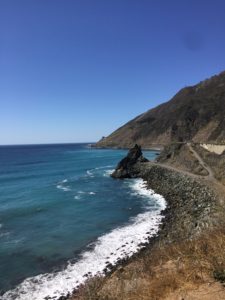
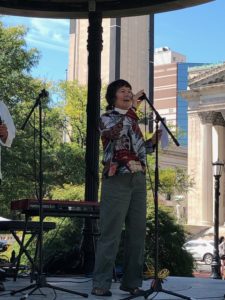
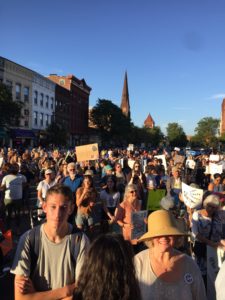
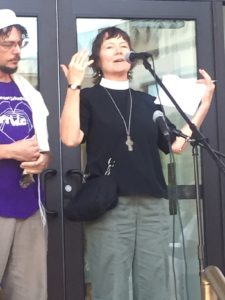
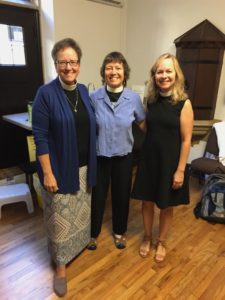
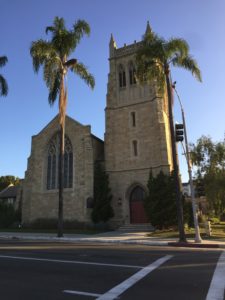
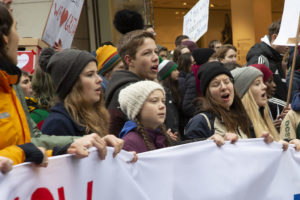
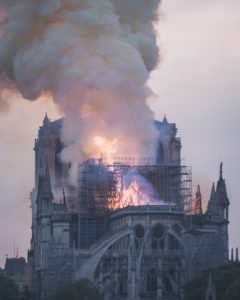
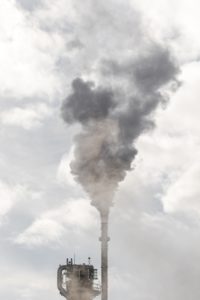
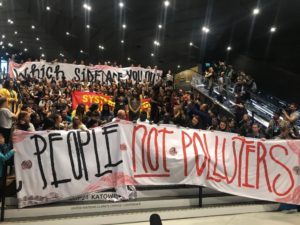
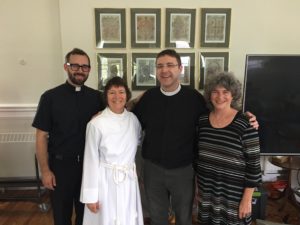
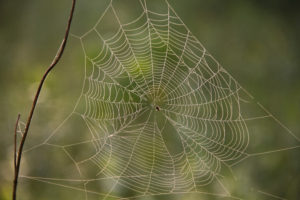
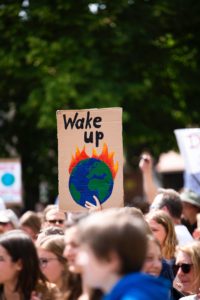
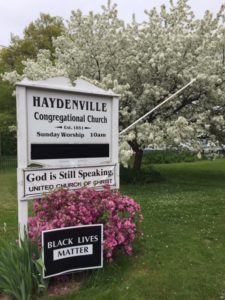 These are urgent and tender words, the words of someone facing death and eager to convey what really matters. “Little children, love one another.” I’m told that in John the Evangelist’s old age, that was the basic message he brought to one community of faith after another: “Little children, love one another.” After spending time with Jesus, and after years of meditating on Jesus’ life and teaching, on Jesus’ crucifixion and resurrection, the aging evangelist could find no more direct route into the heart of the Gospel than simply to say, “Little children, love one another.”
This brings to mind a poem by Michael Leunig:1
There are only two feelings. Love and fear.
There are only two languages. Love and fear.
There are only two activities. Love and fear.
There are only two motives, two procedures,
two frameworks, two results.
Love and fear.
Love and fear.
As followers of Jesus, we may be called to love, but I don’t for a moment believe that we’re not also well acquainted with fear. I remember my childhood fears, such as my fear of the monsters lurking under the bed, and how important it was not to let even one toe stick out beyond the edge of the mattress. I remember my fear that when my parents went out at night, they might not come back. I remember my fear of the swarm of bees that nested near the front door; my fear, during piano recitals, that I might forget which note came next; my fear that I might be chosen last for the softball team, or, what’s worse, that the ball might actually come hurtling in my direction and – dreadful thought – all my team-mates would count on me to catch it.
The fears of a child gradually morph into the fears of an adult, and even though we grownups may go to a great deal of trouble not to appear anxious or afraid, most us face some kind of fear every day. Fears come in all shapes and sizes. What are you afraid of? Chances are excellent that several of us fear the same thing. And we know what that’s like: how, when frightened, we hold our breath, our bellies clench and our hearts race.
There’s a lot of fear going around these days, and we have reason to worry. In addition to our personal fears, we feel a collective shudder about the state of the world, from the assault on women’s reproductive rights to the harsh treatment of immigrants. For me, it’s the ecological crisis that wakes me up at night, for scientists are reporting with increasing concern that the web of life is unraveling before our eyes and that human civilization is at risk of collapse. Just think of it: the number of animals around the world has plummeted by over half in less than 50 years, mostly by the development of great swaths of land and the destruction of habitat. Human activity has wiped out 60% of the world’s mammals, reptiles, amphibians, birds, and fish since 1970. Alarmed scientists are describing what they call a “biological annihilation,” and one expert commented: “This is far more than just being about losing the wonders of nature, desperately sad though that is…This is actually now jeopardizing the future of people. Nature is not a ‘nice to have’ – it is our life-support system.” A few weeks ago, a sweeping new report from the U.N. spoke about the possible extinction of as many as one million plant and animal species in the near future.
And then there’s the climate crisis. Burning fossil fuels like coal, gas, and oil is pushing the planet to break new records for heat, causing droughts, floods, and monster hurricanes, drowning cities, and accelerating wildfires. The people hurt first and hardest by the effects of a changing climate are the poor, and unless we change course fast, we will not be able to leave our children and our children’s children a habitable world. The U.N.’s Intergovernmental Panel on Climate Change warns that we have only a very short span of time – maybe 12 years – in which to avert a catastrophic level of global warming worldwide.
These are urgent and tender words, the words of someone facing death and eager to convey what really matters. “Little children, love one another.” I’m told that in John the Evangelist’s old age, that was the basic message he brought to one community of faith after another: “Little children, love one another.” After spending time with Jesus, and after years of meditating on Jesus’ life and teaching, on Jesus’ crucifixion and resurrection, the aging evangelist could find no more direct route into the heart of the Gospel than simply to say, “Little children, love one another.”
This brings to mind a poem by Michael Leunig:1
There are only two feelings. Love and fear.
There are only two languages. Love and fear.
There are only two activities. Love and fear.
There are only two motives, two procedures,
two frameworks, two results.
Love and fear.
Love and fear.
As followers of Jesus, we may be called to love, but I don’t for a moment believe that we’re not also well acquainted with fear. I remember my childhood fears, such as my fear of the monsters lurking under the bed, and how important it was not to let even one toe stick out beyond the edge of the mattress. I remember my fear that when my parents went out at night, they might not come back. I remember my fear of the swarm of bees that nested near the front door; my fear, during piano recitals, that I might forget which note came next; my fear that I might be chosen last for the softball team, or, what’s worse, that the ball might actually come hurtling in my direction and – dreadful thought – all my team-mates would count on me to catch it.
The fears of a child gradually morph into the fears of an adult, and even though we grownups may go to a great deal of trouble not to appear anxious or afraid, most us face some kind of fear every day. Fears come in all shapes and sizes. What are you afraid of? Chances are excellent that several of us fear the same thing. And we know what that’s like: how, when frightened, we hold our breath, our bellies clench and our hearts race.
There’s a lot of fear going around these days, and we have reason to worry. In addition to our personal fears, we feel a collective shudder about the state of the world, from the assault on women’s reproductive rights to the harsh treatment of immigrants. For me, it’s the ecological crisis that wakes me up at night, for scientists are reporting with increasing concern that the web of life is unraveling before our eyes and that human civilization is at risk of collapse. Just think of it: the number of animals around the world has plummeted by over half in less than 50 years, mostly by the development of great swaths of land and the destruction of habitat. Human activity has wiped out 60% of the world’s mammals, reptiles, amphibians, birds, and fish since 1970. Alarmed scientists are describing what they call a “biological annihilation,” and one expert commented: “This is far more than just being about losing the wonders of nature, desperately sad though that is…This is actually now jeopardizing the future of people. Nature is not a ‘nice to have’ – it is our life-support system.” A few weeks ago, a sweeping new report from the U.N. spoke about the possible extinction of as many as one million plant and animal species in the near future.
And then there’s the climate crisis. Burning fossil fuels like coal, gas, and oil is pushing the planet to break new records for heat, causing droughts, floods, and monster hurricanes, drowning cities, and accelerating wildfires. The people hurt first and hardest by the effects of a changing climate are the poor, and unless we change course fast, we will not be able to leave our children and our children’s children a habitable world. The U.N.’s Intergovernmental Panel on Climate Change warns that we have only a very short span of time – maybe 12 years – in which to avert a catastrophic level of global warming worldwide.
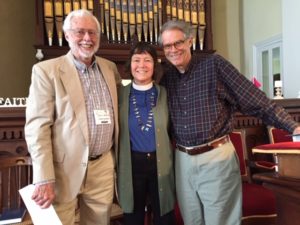
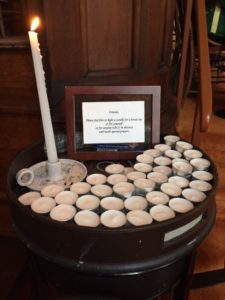 I will end with a story about love and fear.4 Back in 2001 I screwed up my courage and decided to carry out my first act of civil disobedience. That’s how I met your former pastor, Andrea Ayvazian: in Washington, DC, where she was helping to organize a new interfaith group, Religious Witness for the Earth, that was planning to protest President Bush’s intention to drill for more oil in the Arctic.
Here’s what happened: On the first day we learned about oil drilling and the Arctic, about climate change and fossil fuels. On the second we lobbied our members of Congress and studied the disciplines of non-violent civil disobedience. On the third, about a hundred of us marched down Independence Avenue in religious vestments, carrying banners and singing. When we reached the Department of Energy, an enormous stone structure surrounded by police, we held a brief worship service. So far, everything was legal. Then came the part that wasn’t. I’ll read from an essay I wrote about what that was like.
The worship service was coming to an end. We sang “Amazing Grace,” and then the twenty-two of us who had decided to risk arrest joined hands and walked slowly to the doors of the Department of Energy.
I felt us cross an invisible boundary. With the others, I stepped over a threshold I could not see. I walked out of my ordinary life.
I am neither a law-breaker nor a thrill-seeker. More often than not, I follow the rules – even enforce them. I fasten my seat belt, don’t cheat on taxes, write thank you notes, and stand up when the band plays our national anthem. But here I was, intentionally and publicly breaking the law. As if some inner revolution had quietly taken place, the old “me” was no longer in charge. Whatever security I’d felt in operating within the rules was gone. That’s partly why I felt so frightened as I left the safety of the circle and moved toward the door: I hardly recognized myself. I hardly knew who I was.
§§
We stand or kneel in prayer, our backs to the building.
The pavement under my knees is hard. At home, I often sit on a meditation cushion to pray. Today there is no cushion, just the weight of my body against stone. I lift up my hands. I’m dressed for Holy Communion. I might as well hold out my arms as I do at Communion.
Instead of pews filled with parishioners, I see ranks of police and a cluster of supporters. I am afraid. I’ve never been arrested before. Years ago, as a VISTA volunteer in Mayor Rizzo’s Philadelphia I heard countless stories of police brutality. It’s not that I really expect the same thing to happen to me – the punch in the gut, the assault behind closed doors. Still, my body tenses as I place myself against the cops, the Feds, the law.
I close my eyes. One by one we pray aloud, words thrown into space, words hurled against stone.
Is this whole thing ridiculous? I briefly open my eyes and notice a well-dressed man watching us. He strokes his tie, leans over and says something to a fellow nearby. The two of them chuckle. I have no idea what they’re talking about but I wonder if they think we look absurd. I suppose we do. Here we are with our jerry-rigged signs, our predictably earnest songs and prayers of protest, a foolhardy band straight out of the ‘60’s.
Defensively, I imagine confronting that mocking man with the arsenal of our credentials. “We’re no rag-tag bunch,” I want to tell him. “We’re people with doctorates and master’s degrees – nurses and ministers, writers and accountants. Thoughtful people, educated people, professionals.”
I am distracted from prayer by this indignant outburst. “Let it go,” wisdom tells me. “None of that matters — your degrees, your skills, your status in the world. The privileges of race and class mean nothing now. You’re a woman on your knees, that’s who you are — one human being pleading with God.”
I turn my attention back to prayer and continue to stretch out my arms. Suddenly I realize that behind the tension, behind the fear and self-consciousness, something else is welling up. I am jubilant.
“Lift up your hearts,” I might as well be saying to the people before me, beaming as broadly as I do at Communion.
“We lift them to the Lord,” would come the response.
How did I miss it? After years of going to church, after years of celebrating Communion, only now, as I kneel on pavement and face a phalanx of cops, do I understand so clearly that praising God can be an act of political resistance. That worship is an act of human liberation. The twenty-two of us come from different faith traditions, but each of us is rooted in a reality that transcends the rules and structures of this world. Tap into that transcendent truth, let the divine longing for a community of justice and mercy become your own deepest longing, and who knows what energy for life will be released?
I feel as defiant as a maple seedling that pushes up through asphalt. It is God I love, and God’s green earth. I want to bear witness to that love even in the face of hatred or indifference, even if the cost is great.
So what if our numbers are small? So what if, in the eyes of the police, in the eyes of the world, we have no power? I’m beginning to sense the power that is ours to wield, the power of self-offering. We may have nothing else, but we do have this, the power to say, “This is where I stand. This is what I love. Here is something for which I’m willing to put my body on the line.”
I never knew that stepping beyond the borders of what I find comfortable could make me so happy. That shifting from self-preservation to self-offering could awaken so much joy.
Love and fear. Love and fear. I invite you to take a moment to remember a time when you took a brave step toward fullness of life, a time when you made a decision to do the right thing, even though you knew it would be difficult or costly. Who inspired you to be bolder than you thought? With whom do you hold hands, literally or figuratively, when you step out to make a difference in the world? And if you knew you could not fail – if you were set free from fear – what would you do for the healing of our world?
Let’s take a moment in silence, and then I invite your response.
1. Michael Leunig, A Common Prayer (NY: HarperCollins, 1991).
2. David Wallace-Wells, The Uninhabitable Earth (New York: Tim Duggan Books, Penguin Random House, 2019).
3. Hafiz, quoted by Jack Kornfield, The Art of Forgiveness, Lovingkindness, and Peace (New York: Bantam Books, 2002), 83.
4. This story is adapted from part of my chapter, “When Heaven Happens,” in the anthology Heaven, ed. Roger Ferlo (New York: Seabury Books, 2007), 78-81.
I will end with a story about love and fear.4 Back in 2001 I screwed up my courage and decided to carry out my first act of civil disobedience. That’s how I met your former pastor, Andrea Ayvazian: in Washington, DC, where she was helping to organize a new interfaith group, Religious Witness for the Earth, that was planning to protest President Bush’s intention to drill for more oil in the Arctic.
Here’s what happened: On the first day we learned about oil drilling and the Arctic, about climate change and fossil fuels. On the second we lobbied our members of Congress and studied the disciplines of non-violent civil disobedience. On the third, about a hundred of us marched down Independence Avenue in religious vestments, carrying banners and singing. When we reached the Department of Energy, an enormous stone structure surrounded by police, we held a brief worship service. So far, everything was legal. Then came the part that wasn’t. I’ll read from an essay I wrote about what that was like.
The worship service was coming to an end. We sang “Amazing Grace,” and then the twenty-two of us who had decided to risk arrest joined hands and walked slowly to the doors of the Department of Energy.
I felt us cross an invisible boundary. With the others, I stepped over a threshold I could not see. I walked out of my ordinary life.
I am neither a law-breaker nor a thrill-seeker. More often than not, I follow the rules – even enforce them. I fasten my seat belt, don’t cheat on taxes, write thank you notes, and stand up when the band plays our national anthem. But here I was, intentionally and publicly breaking the law. As if some inner revolution had quietly taken place, the old “me” was no longer in charge. Whatever security I’d felt in operating within the rules was gone. That’s partly why I felt so frightened as I left the safety of the circle and moved toward the door: I hardly recognized myself. I hardly knew who I was.
§§
We stand or kneel in prayer, our backs to the building.
The pavement under my knees is hard. At home, I often sit on a meditation cushion to pray. Today there is no cushion, just the weight of my body against stone. I lift up my hands. I’m dressed for Holy Communion. I might as well hold out my arms as I do at Communion.
Instead of pews filled with parishioners, I see ranks of police and a cluster of supporters. I am afraid. I’ve never been arrested before. Years ago, as a VISTA volunteer in Mayor Rizzo’s Philadelphia I heard countless stories of police brutality. It’s not that I really expect the same thing to happen to me – the punch in the gut, the assault behind closed doors. Still, my body tenses as I place myself against the cops, the Feds, the law.
I close my eyes. One by one we pray aloud, words thrown into space, words hurled against stone.
Is this whole thing ridiculous? I briefly open my eyes and notice a well-dressed man watching us. He strokes his tie, leans over and says something to a fellow nearby. The two of them chuckle. I have no idea what they’re talking about but I wonder if they think we look absurd. I suppose we do. Here we are with our jerry-rigged signs, our predictably earnest songs and prayers of protest, a foolhardy band straight out of the ‘60’s.
Defensively, I imagine confronting that mocking man with the arsenal of our credentials. “We’re no rag-tag bunch,” I want to tell him. “We’re people with doctorates and master’s degrees – nurses and ministers, writers and accountants. Thoughtful people, educated people, professionals.”
I am distracted from prayer by this indignant outburst. “Let it go,” wisdom tells me. “None of that matters — your degrees, your skills, your status in the world. The privileges of race and class mean nothing now. You’re a woman on your knees, that’s who you are — one human being pleading with God.”
I turn my attention back to prayer and continue to stretch out my arms. Suddenly I realize that behind the tension, behind the fear and self-consciousness, something else is welling up. I am jubilant.
“Lift up your hearts,” I might as well be saying to the people before me, beaming as broadly as I do at Communion.
“We lift them to the Lord,” would come the response.
How did I miss it? After years of going to church, after years of celebrating Communion, only now, as I kneel on pavement and face a phalanx of cops, do I understand so clearly that praising God can be an act of political resistance. That worship is an act of human liberation. The twenty-two of us come from different faith traditions, but each of us is rooted in a reality that transcends the rules and structures of this world. Tap into that transcendent truth, let the divine longing for a community of justice and mercy become your own deepest longing, and who knows what energy for life will be released?
I feel as defiant as a maple seedling that pushes up through asphalt. It is God I love, and God’s green earth. I want to bear witness to that love even in the face of hatred or indifference, even if the cost is great.
So what if our numbers are small? So what if, in the eyes of the police, in the eyes of the world, we have no power? I’m beginning to sense the power that is ours to wield, the power of self-offering. We may have nothing else, but we do have this, the power to say, “This is where I stand. This is what I love. Here is something for which I’m willing to put my body on the line.”
I never knew that stepping beyond the borders of what I find comfortable could make me so happy. That shifting from self-preservation to self-offering could awaken so much joy.
Love and fear. Love and fear. I invite you to take a moment to remember a time when you took a brave step toward fullness of life, a time when you made a decision to do the right thing, even though you knew it would be difficult or costly. Who inspired you to be bolder than you thought? With whom do you hold hands, literally or figuratively, when you step out to make a difference in the world? And if you knew you could not fail – if you were set free from fear – what would you do for the healing of our world?
Let’s take a moment in silence, and then I invite your response.
1. Michael Leunig, A Common Prayer (NY: HarperCollins, 1991).
2. David Wallace-Wells, The Uninhabitable Earth (New York: Tim Duggan Books, Penguin Random House, 2019).
3. Hafiz, quoted by Jack Kornfield, The Art of Forgiveness, Lovingkindness, and Peace (New York: Bantam Books, 2002), 83.
4. This story is adapted from part of my chapter, “When Heaven Happens,” in the anthology Heaven, ed. Roger Ferlo (New York: Seabury Books, 2007), 78-81. 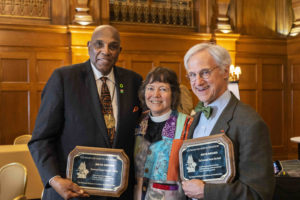
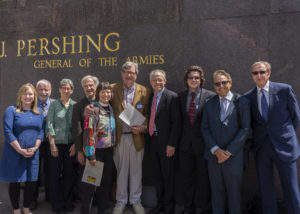
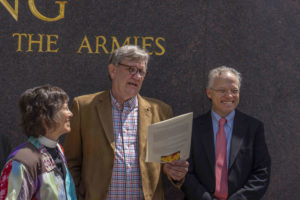
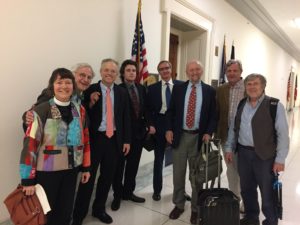
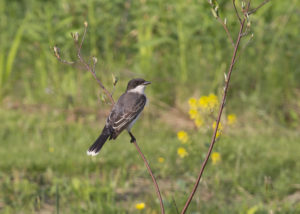
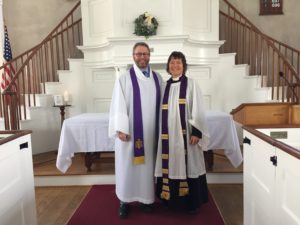
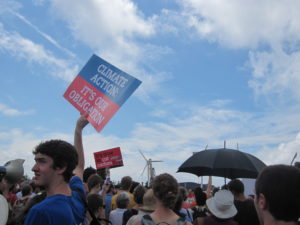
 What would it look like if humanity “came to ourselves”? Maybe it would look something like this: one individual after another saying, “Hey, wait a second. We don’t have to live like this. We don’t have to settle for a death-dealing, materialistic society that willy-nilly gobbles up all the land and trees and creatures of this world, extracts and burns dirty fossil fuels, pours toxic pollutants into the water and air, and stuffs the landfill with plastics and waste. We don’t have to settle for a suicidal course that steals a habitable world from our children. Through the grace of God we can make changes in our own lives, so that we live more gently and lovingly on the Earth, and we can resist and protest the powers-that-be that are determined to make huge profits by treating people and planet alike as completely disposable, extracting every last drop of oil and gas and every last ounce of coal, and cutting down every last tree.” We can say to ourselves, “I’m going to turn my own life around and make the changes I can make, and I’m also going to stand with all the people of the world who want what I want – a society marked by generosity, not greed; by justice, not prejudice and inequity; by love, and not indifference and hate.” Like the prodigal son, we can say to ourselves “I will get up and go to my father” (Luke 15:18) and begin the journey home.
If you’d like to discuss the specific things we can do as we make that journey, and talk about everything from electric cars to the Green New Deal, I hope you’ll meet with me after the service.
You know, the journey we’re undertaking will not be an easy one, for the challenges ahead of us are great and the corporate and political powers arrayed against us are strong. The IPCCC tells us that in order to avert climate chaos and the possible collapse of civilization, humanity has to change course at a scale and speed that is unprecedented in human history. So, yeah, as we rise up to fight for a better world, sometimes we’ll find ourselves wrestling with feelings of helplessness, grief, and even despair. I’m so interested in what gives us strength and energy to keep going that I just finished co-editing a book of essays with my friend Leah Schade, which will be published this fall. It’s entitled Rooted and Rising: Voices of Courage in a Time of Climate Crisis, and it’s a collection of essays by 21 faith-based climate activists, reflecting on the spiritual practices that sustain us.
I can think of no more beautiful way to spend ones life than to take part in what leaders like Joanna Macy and David C. Korten call the Great Turning, the epic transition from a deathly society to one that fosters life. It’s what philosopher Thomas Berry calls the “Great Work”: our wholehearted effort to create a more just and sustainable society. And it’s what Archbishop Desmond Tutu calls the “supreme work” of Jesus Christ, who longs to reconcile us to God and to each other and to the whole of God’s Creation.2
You know, God loves it when we come home. God gets happy when we who are lost are willing to be found. That’s what Jesus shows us in the next part of the parable: the father, who has evidently been waiting eagerly for his son’s return, catches sight of him while he is “still far off” and, “filled with compassion” (Luke 15:20), runs out to greet him and catches him up in his arms in an exuberant embrace.
The story of the prodigal son is a grand story about reunion, about being lost and being found, about forgiveness and reconciliation. May it be our story, too, as we come home to ourselves and turn our lives toward loving God and all our neighbors, including our brother-sister beings and the Earth upon which all life depends.
What would it look like if humanity “came to ourselves”? Maybe it would look something like this: one individual after another saying, “Hey, wait a second. We don’t have to live like this. We don’t have to settle for a death-dealing, materialistic society that willy-nilly gobbles up all the land and trees and creatures of this world, extracts and burns dirty fossil fuels, pours toxic pollutants into the water and air, and stuffs the landfill with plastics and waste. We don’t have to settle for a suicidal course that steals a habitable world from our children. Through the grace of God we can make changes in our own lives, so that we live more gently and lovingly on the Earth, and we can resist and protest the powers-that-be that are determined to make huge profits by treating people and planet alike as completely disposable, extracting every last drop of oil and gas and every last ounce of coal, and cutting down every last tree.” We can say to ourselves, “I’m going to turn my own life around and make the changes I can make, and I’m also going to stand with all the people of the world who want what I want – a society marked by generosity, not greed; by justice, not prejudice and inequity; by love, and not indifference and hate.” Like the prodigal son, we can say to ourselves “I will get up and go to my father” (Luke 15:18) and begin the journey home.
If you’d like to discuss the specific things we can do as we make that journey, and talk about everything from electric cars to the Green New Deal, I hope you’ll meet with me after the service.
You know, the journey we’re undertaking will not be an easy one, for the challenges ahead of us are great and the corporate and political powers arrayed against us are strong. The IPCCC tells us that in order to avert climate chaos and the possible collapse of civilization, humanity has to change course at a scale and speed that is unprecedented in human history. So, yeah, as we rise up to fight for a better world, sometimes we’ll find ourselves wrestling with feelings of helplessness, grief, and even despair. I’m so interested in what gives us strength and energy to keep going that I just finished co-editing a book of essays with my friend Leah Schade, which will be published this fall. It’s entitled Rooted and Rising: Voices of Courage in a Time of Climate Crisis, and it’s a collection of essays by 21 faith-based climate activists, reflecting on the spiritual practices that sustain us.
I can think of no more beautiful way to spend ones life than to take part in what leaders like Joanna Macy and David C. Korten call the Great Turning, the epic transition from a deathly society to one that fosters life. It’s what philosopher Thomas Berry calls the “Great Work”: our wholehearted effort to create a more just and sustainable society. And it’s what Archbishop Desmond Tutu calls the “supreme work” of Jesus Christ, who longs to reconcile us to God and to each other and to the whole of God’s Creation.2
You know, God loves it when we come home. God gets happy when we who are lost are willing to be found. That’s what Jesus shows us in the next part of the parable: the father, who has evidently been waiting eagerly for his son’s return, catches sight of him while he is “still far off” and, “filled with compassion” (Luke 15:20), runs out to greet him and catches him up in his arms in an exuberant embrace.
The story of the prodigal son is a grand story about reunion, about being lost and being found, about forgiveness and reconciliation. May it be our story, too, as we come home to ourselves and turn our lives toward loving God and all our neighbors, including our brother-sister beings and the Earth upon which all life depends.
